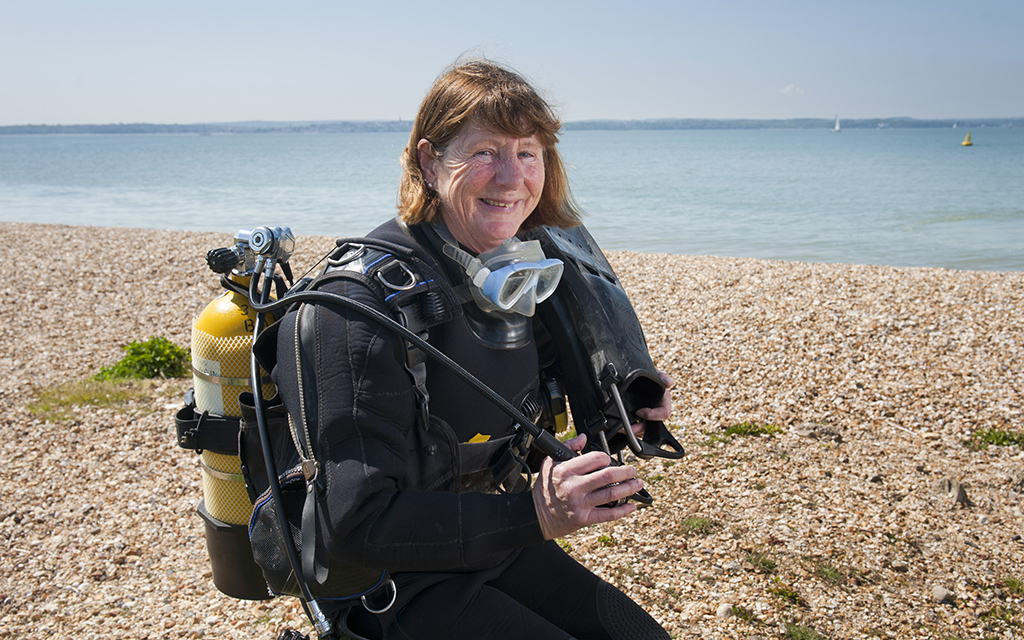
Jane Maddocks share her thoughts on personal goals we can set for 2026 to improve our carbon footprints, to help contribute to cleaner waters and a healthier environment.
We live on a hugely unstable planet. My archaeologist friends know that changing sea levels and changing climates are a fact of life on Earth and has been for millions of years.
What is different now is that the need for extracting material from the earth, and the way we use that material, is accelerating climate change.
So much of this speed of change depends on actions from various governments, and lifestyles that demand the use of precious metals, very rare metals and the products of deep mining in the sea.
News that major marine protected areas will now have that protection removed so that fishing can take place, or that drilling for oil in previously protected environments is now to be encouraged can be overwhelming.
I have been so impressed by the way divers in general, and BSAC members in particular are responding to all of this. We may not change the world, but so many of us are doing what we can. Lots of seemingly small efforts can add up to a real hope for change.
Branches are adopting environment champions, doing litter picks on beaches and underwater, spending days scrubbing oysters so they can make new reefs, measuring and identifying seagrass beds, and doing huge in-branch projects creating baseline records of species in harbours and intertidally.
So much of this amazing input is in the public domain. The pressure to improve water quality and record and protect Marine Protected Areas gets headlines-and rightly so.
But what about each one of us as an individual? It is good to demand that THEY do something. But what about ME as an individual, what I can I do?
I have been thinking about this and am going to set myself four goals for the next few months. They are:
- Replace plastic bins and storage with steel (readily recyclable) willow (naturally breaks down after use) or bamboo (species used is fast growing).
- Reduce the heating by one degree and embrace the sweater! I am also going to remember that as a drysuit diver I have a wonderful collection of diving underwear in vibrant colours that can double as thermal protection at home.
- Shower room revolution - this involves the 4-minute shower, and giving up transporting shampoo, soap etc. in plastic bottles with lots of heavy water. Bars of soap, shampoo and conditioner - let’s see how it goes. And let’s not mention lavatory paper from secondary recycled paper...
- (The big one) Research the chemicals in my food/drink/medicine/ cleaning materials. Then look at how those chemicals are dealt with in the body and in the waste disposal systems.
I already know that there is one type of soft drink that I will never drink again because one ingredient is excreted unchanged into the sewage system and cannot be removed by our treatment works.
That leads me to the next important bit - what do you/could you do as an individual to contribute to helping reduce the rate of global warming?
It would be wonderful to create a pool of ideas that we could pick from to enable us to reduce our impact. Even small things may enhance water quality, put fewer chemicals into the sea, or reduce the amount of plastic in the oceans.
Become a Marine Champion!
For more information on becoming a BSAC Marine Champion for your club, go to bsac.com/marinechampions
#BSACMarineChampions
 Author: Jane Maddocks | Posted 03 Jan 2026