
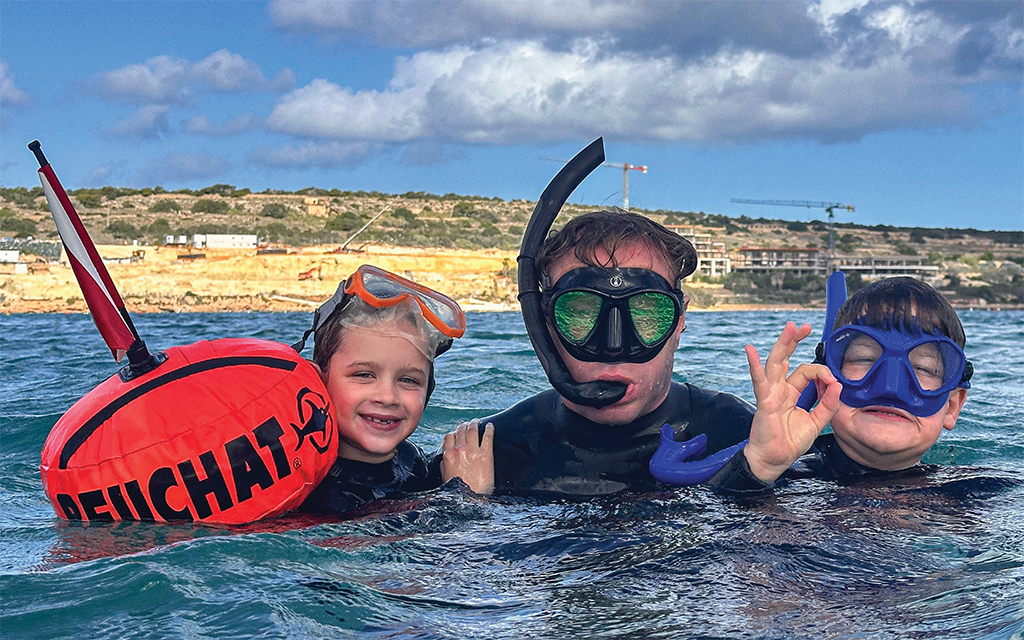
In the first of a two-parter on Malta, Andy Torbet talks about his love for the island nation, and why it’s the ideal destination to take the family snorkelling.
I have visited Malta many times over the last 20 years. During my time on bomb disposal duty in the Forces I had little time for leave, but would try and fit in a week now and then to escape to Malta. There is a familiarity in Malta that makes any Brit feel at home, 1,300 miles away in the centre of the Mediterranean. Malta embraces its connections with the UK – English is the official second language and they even drive on the left-hand side. All of this makes it a very low-stress destination for sun-seeking Brits.
There is much for divers of all levels, from snorkeller to technical. What I always appreciated was that so much of the diving – reefs, caves and wrecks - could all be accessed from the shore, with no need for a boat. This meant all you needed was a set of wheels and a dive centre that would hire you some cylinders and lead; you could make up your dive diary as you saw fit, as long as you were suitably qualified.
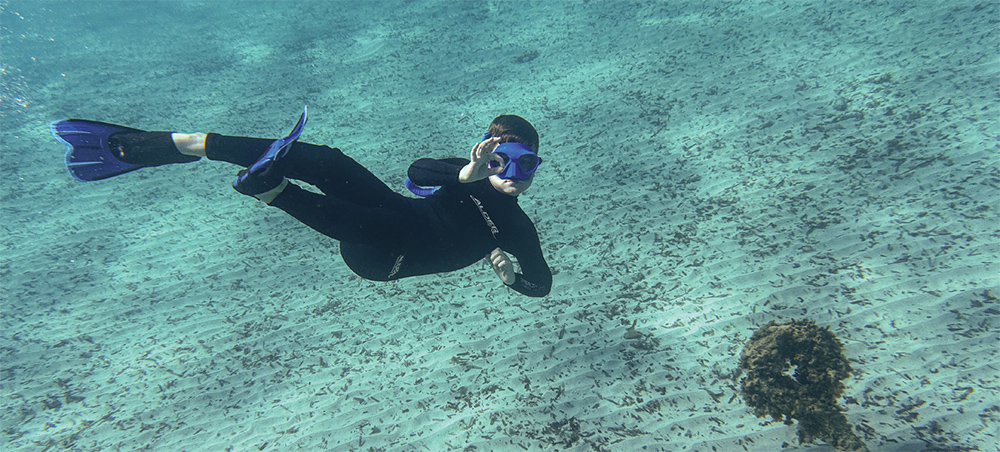
The lack of significant tides also allowed you to improvise your schedule. This proved useful when, as a much younger and more dashing soldier, I may have embraced the culture a little too much the evening before and been desirous of a later start to the diving day.
Fast forward to the present day, and I now have a young family in tow; the late nights are a thing of the past. This particular trip was the second time we had visited Malta as a family, and now it looks like becoming an annual pilgrimage. With a 10 and eight-year-old in tow, it was a snorkel-focused sojourn that would feature more marine time and less late nights than those heady trips of my youth.
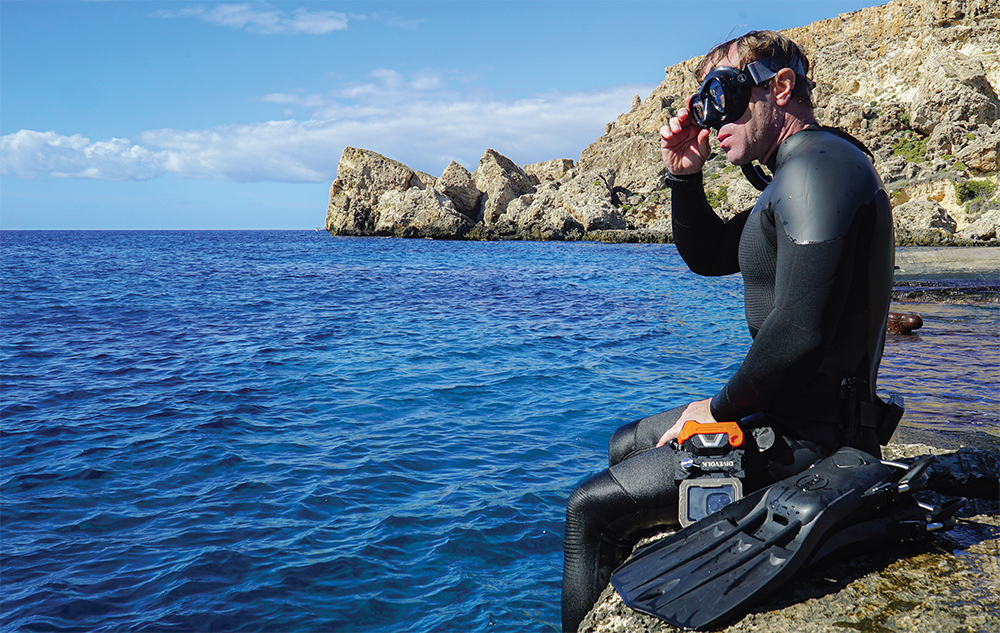
I have often used shore diving guidebooks to discover good snorkel sites; Malta’s plethora of easy-entry, beginner-level diver sites means there’s plenty of options. However, I have become acutely aware over the years, especially when dealing with young children or the inexperienced, how much more wind can affect a snorkeller.
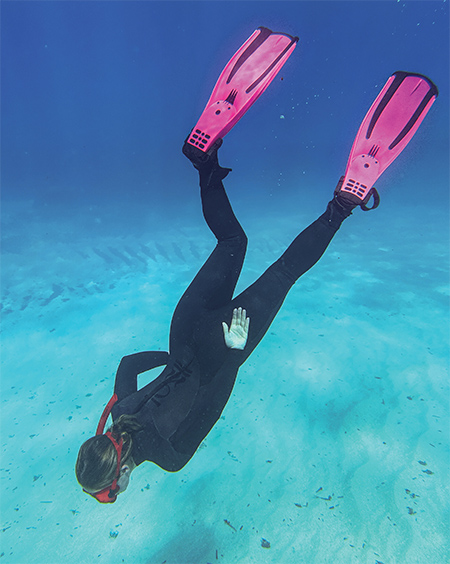 For snorkellers at the surface, the full effect of the wind is an ever-present factor. We discovered the practical reality of this on two days of our holiday, first from the northwest and later from the opposing southeast. The beauty of diving around the relatively small island of Malta, is that one side – and therefore plenty of dive sites – is always in the lee.
The waters, 23-24°C even at Halloween, required a 3mm at most and often less. At the surface, the sun was our friend, though it does make sunscreen absolutely crucial for skin protection. Needless to say, the onus is on all of us to use a reef-safe option to ensure we are not adding to the problems of marine pollution.
The warm waters allowed us to spend hours at a time snorkelling. This extended immersion, coupled with the heat itself, introduced a risk of dehydration. We made sure everyone’s water bottles were regularly topped up, and that everyone maintained hydration.
Snorkelling is the simplest form of diving, and in a place like Malta it becomes even easier. But, as with all forms of diving, our physical wellbeing remains a priority, so that we can return to the water, happy and healthy, time and again.
Go snorkelling!
Learn more on snorkelling with BSAC. Looking to introduce snorkelling into your club? Find out more at bsac.com/snorkellinginstructor
Article 'Warm water, warm welcome' by Any Torbet first published in SCUBA magazine, Issue 162 Jan/Feb 2026.
 Author: Andy Torbet | Posted 16 Feb 2026


