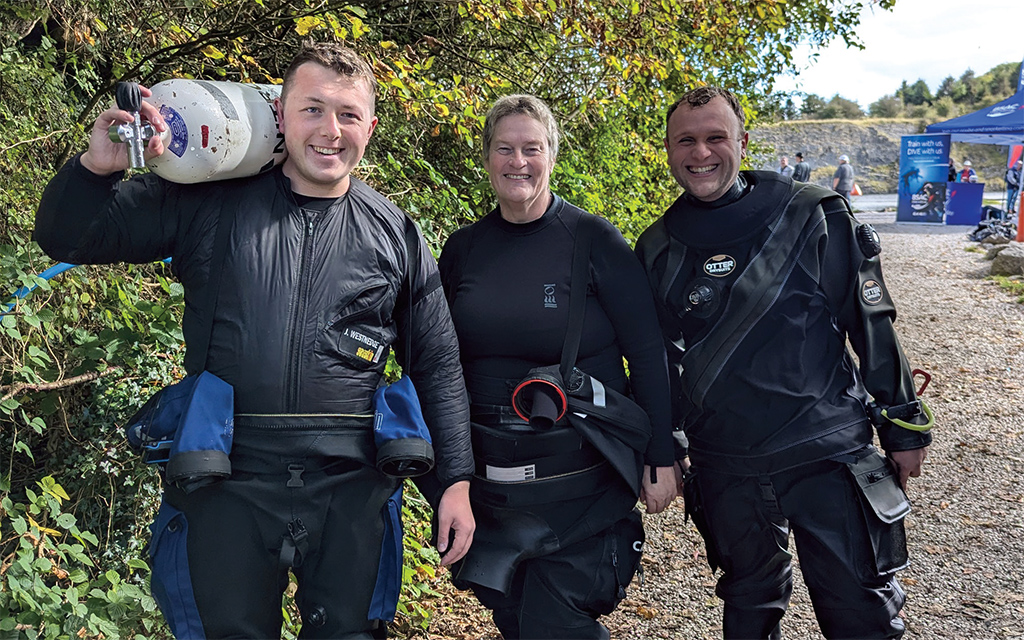
To round off Volunteers’ Week 2026, Kristina Pedder meets Joseph Westnedge, BSAC’s University coordinator, to ask him about his volunteer role.
Sheffield-based Joe Westnedge belongs to Sheffield University SAC (SUSAC); South Bay Scuba at Scarborough; and North-East Derbyshire SAC. Each gives him opportunities to develop his skills.
Joe, a Dive Leader and Open Water Instructor in his 20s with some 240 logged dives, is also an approved twin set and accelerated decompression procedures instructor. He enjoys helping Sports Divers extend their range. “I find it important to log my dives as a record of experience. I also log when I instruct, to make sure I get a balance in the types of diving I do,” he says.
FACT FILE
Name: Joe Westnedge
Job titles: University Coordinator
Area covered: UK universities
First dive: 19 March 2022
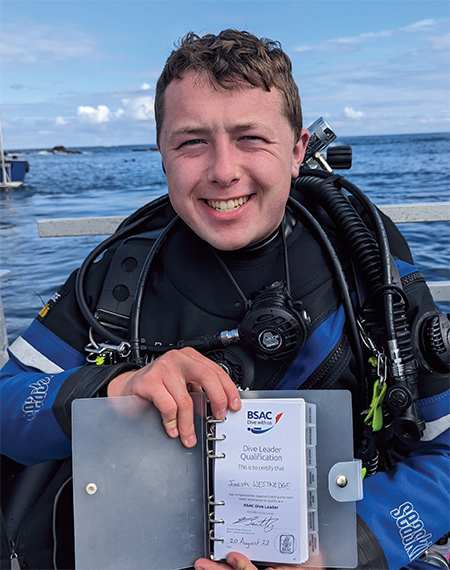 In SUSAC, Joe was Equipment Officer for a year. Sitting on the club’s committee brought the challenges Uni clubs face into focus. There’s such a high turnover of members with very limited finances to spend on activities. This understanding was a good foundation for his volunteer role as BSAC’s University Coordinator. Joe has been in post for just over a year now, ensuring that the university club network gets the support it needs.
He networks with university club committees to provide their feedback to HQ. He also works closely with the regional coaching teams, attending bi-monthly meetings to help facilitate training support where possible. When not in the water or at work he tries to get out and about on branch visits wherever possible. If there is anything that could be better, he says, contact him (unicoordinator@bsac.com).
Joe is Training Officer at NEDSAC and is bringing a new spin to training where he can. “This gives me insight into the wider BSAC community,” he says. “I also help out with regional courses such as Practical Rescue Management, which gets me meeting people and adapts my instructor skills outside the norms of branch training.”
As an R&D Engineer, his role at work is to develop new products and atomising technology for manufacturing metal powders for a variety of applications. Diving is never far from his mind though. “Sintered metal filters are one application of this work,” he says, “and these can, of course, be found in your regulator’s first stage.”
I ask how he got into diving. Since he was little, he has always been fascinated by wildlife. His first underwater experience was on a family holiday to Mallorca. His nan and grandad bought him a snorkel and mask set and he learned to dive under the surface of the pool. “I didn’t try scuba until I got to university,” he says. “That’s where I saw SUSAC offering give-it-a-go sessions. I booked on and got the diving bug, joined the club and the rest is history.”
Getting involved in diving has enabled Joe to travel to a host of places, he says, enabling his sense of adventure. “The oceans cover so much of our planet, and divers get the opportunity for unique encounters with wildlife, whether it’s a conger hiding in a wreck or a scallop on the seabed. There are few people that experience this. Plus, you get to see some fantastic scenery.”
FAVOURITE KIT
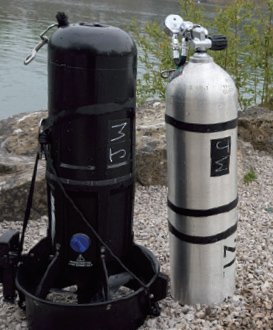
My SUEX VRX Evo diver propulsion vehicle (DPV). Flying through the water, scootering without using too much air is such fun around dive sites; especially inland sites where you always see the same attractions when teaching or because your buddy has limited gas
But Sheffield is actually a great spot to be in, Joe explains, as it’s just a two-hour drive east or west to reach the coast. A little longer north or south, and you can also be at those coasts. His favourite is Scotland, diving classic sites including St Abbs and Sound of Mull and his favourite wreck dive the Hispania. He also enjoys diving in the Firth of Clyde, “There’s so much to explore, such a variety of sites.”
As to his motivation to volunteer, it comes back to the situation at universities. “University clubs face a high turnover of members. Many members achieve Sports Diver before graduating, but there’s little instructor potential unless members continue onto postgraduate courses or stay in their university city.
TEACHING HIGHLIGHT
Advanced Ocean Diver is a fantastic course, as it builds on the skills of an Ocean Diver and allows them to really be ready to dive in the sea. It includes delayed surface marker buoy (dSMB) deployment, navigation skills and the use of SMBs for drift dives.
“As an apprentice,” he says, “I’m working and studying in my city plus I have a car, which makes getting to dive sites easier. Most of all I really enjoy giving people the skills they need to experience the underwater word. Highlights come when an apprehensive try diver becomes a qualified diver. This often includes overcoming barriers, whether it’s taking a mask off in salt or cold water or just spending time to build their comfort.”
The advice he would offer any newly qualified Ocean Diver is to get out with your club. Sign up for trips, because going diving will build your skills and experience. “This will make skills such as buoyancy and trim come naturally,” he says. “Don’t get complacent and dive with the same buddy all the time either, mix it up so that you don’t become lax with buddy checks.”
SKILLS TIP
Every dive is an opportunity to hone your skills. If conditions allow, use safety stops or deco stops to practise drills. This could include switching to your alternate source for a short period of time to ensure it is functional.
Article ‘’Further education fundamentals' by Kristina Pedder first published in SCUBA magazine, Issue 159 October 2025.