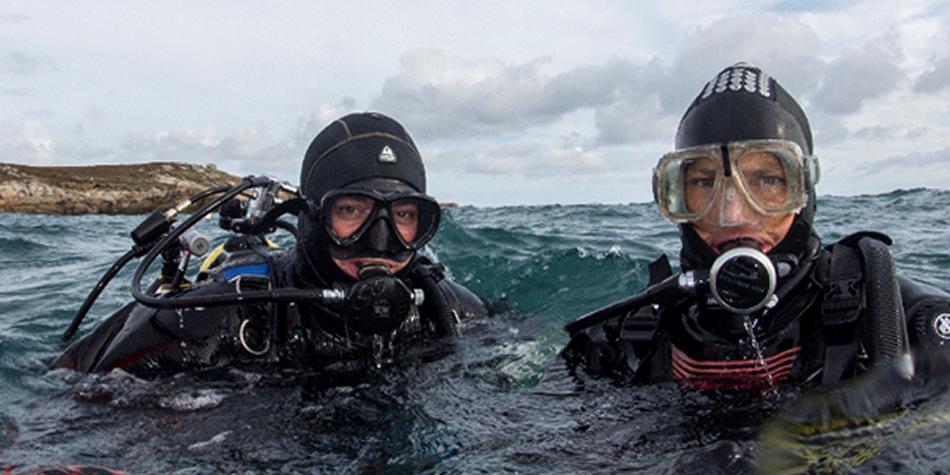
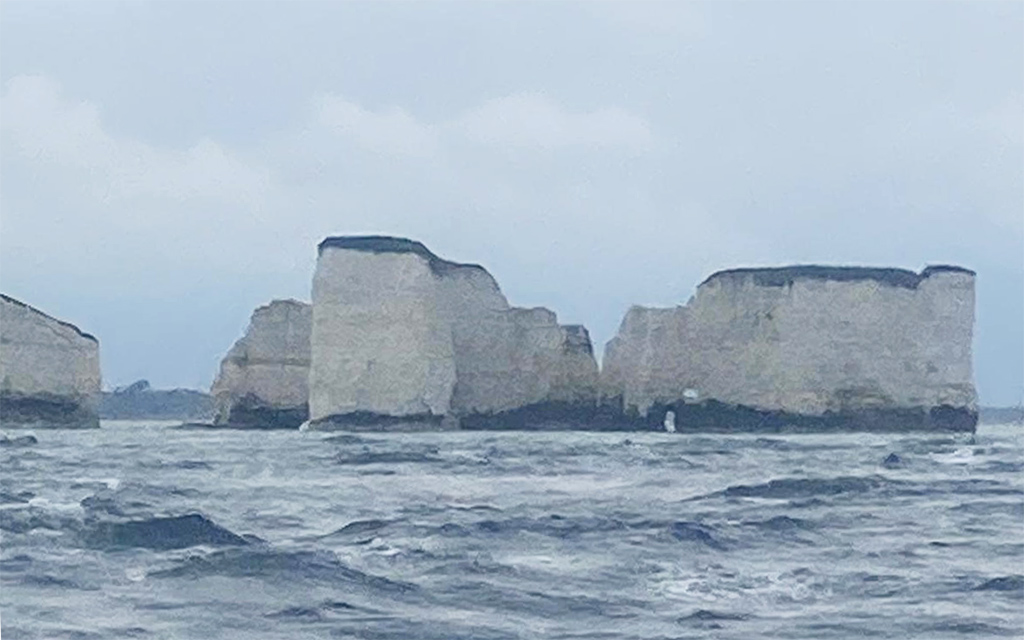
Following an incident where a cross-Channel ferry had to take emergency action to avoid a dive RHIB with divers underwater, the outcome of an investigation by a harbour master follows.
Unlike BSAC Incident reporting protocol, where we draw lessons from the overall reported incidents during a year and from incident trends, we do not comment directly on individual incidents or seek to apportion blame. The synopses for any incident published in the annual report contains the factual detail only, which allows divers to consider the circumstances and hopefully avoid similar situations themselves. We would encourage all dive managers, coxswains and divers to read the following report and apply the learning to diving in your local area.
The duties falling to the harbour master are more significant and as a result the root causes and lessons learned are a necessary outcome from their investigation. The following is the outcome of the harbour master's investigation and is presented verbatim.
Lessons Learned from a Near Miss near Poole Harbour involving a cross-Channel Ferry and BSAC Dive Club Rib and Divers
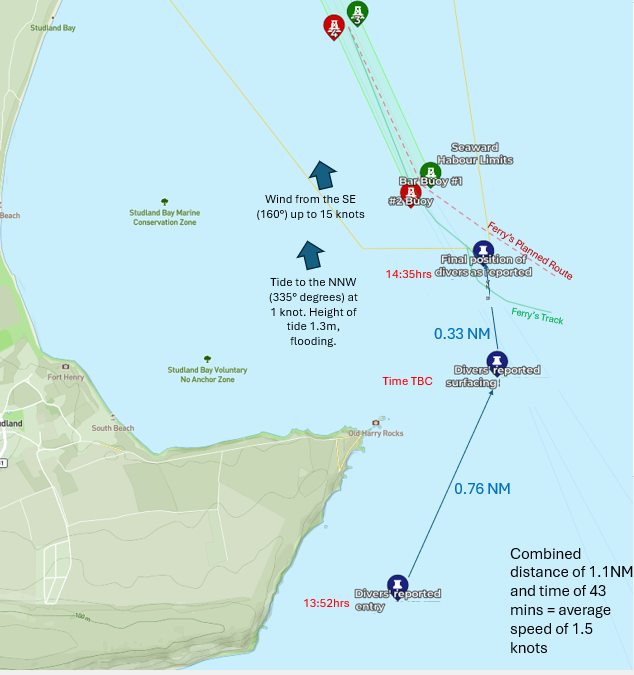
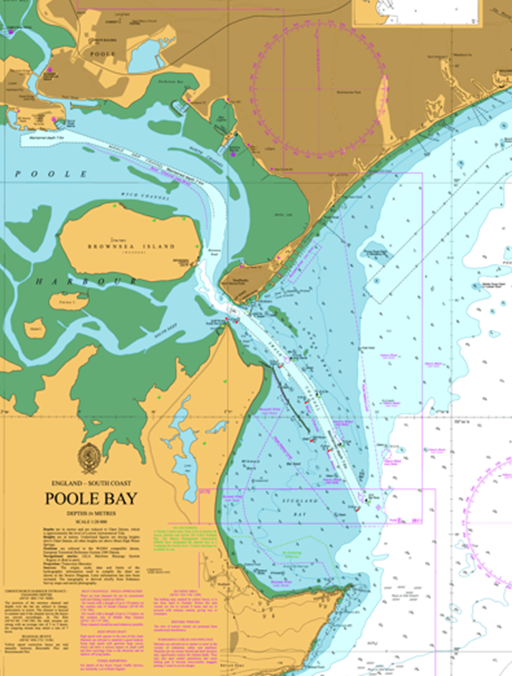
- A cross-channel ferry was outbound through Poole Harbour’s Swash Channel with a Pilot onboard. The bridge team identified a small Rib just beyond No 1 Bar Buoy in the centre of the approaches, drifting northward with the flooding tide and southerly wind. As a result, the ferry started trending slightly right off track between No 3 Buoy and No 1 Bar Buoy in order pass the rib on the ferry’s port side. The ferry’s speed was already low for this area (less than 10 knots) as she was due to disembark a Pilot in vicinity of Bar Buoy (at speeds of 6 to 8 knots). As the ferry passed Bar Buoy, it suddenly became apparent the Rib was flying flag Alpha, which until then had been practically impossible to see due to its relatively small size and the ship’s approach from upwind. Almost immediately afterwards an orange divers Surface Marker Buoy (SMB) became visible next to the rib. The buoy had been lying flat and suddenly stood upwards, making it more visible. The ferry master at this point immediately put all engines full astern and brought the vessel to a stop at a point approximately 50 metres (half a ship’s length) from the rib and two divers who were still being recovered from the water (with 4 other persons already on the rib). This location was approximately a ship’s length outside of the charted line of Poole Harbour Limits. After disembarkation, the Pilot came alongside the Rib in the Pilot boat and gave strong words of advice about the near miss. The ferry manoeuvred to starboard around them and continued its passage across the channel on a heading of approximately 120 degrees.
- The BSAC Club Rib had departed Swanage carrying 2x crew and 4x divers earlier that day. They had planned a dive on a wreck site south of Swanage but the southerly breeze caused them to change plans at short notice to conduct a drift dive along the cliffs from west to east with an aim to finish in the vicinity of Old Harry Rocks. They were anticipating currents of 0.5 knots but the drift dive went far quicker than anticipated with faster flows than expected along the cliffs. The two dive pairs each had Surface Marker Buoys in use and the rib drifted with them (crewed by a coxswain and one other club member). The drift dive took them eastward of Old Harry and then the flooding tide and southerly wind started taking them directly northward towards Bar Buoy (average speed for the whole drift dive calculated as 1.5 knots). About 15 minutes before the near miss with the ferry, the dive rib coxswain realised that they were drifting towards the navigation channel. They commenced their diver recovery process by revving the engine and tugging on the surface marker buoy lines. This position where recovery was commenced is understood to be just over 600 metres south of Bar Buoy. By the time both dive pairs had been (efficiently and compliantly) recovered over the next approximately 15 minutes, the rib was in front of the halted ferry. No attempt was made by the Rib to contact Poole VTS, the Coastguard or the ship directly on Channels 14 or 16. No other distress or collision avoidance signals were employed including hand signals. No attempt at communication was made except Flag Alpha and the orange Surface Marker Buoys.
- Whilst it was fortunately an outcome without harm and the only such occurrence in memory of longstanding PHC staff and all existing incident records, this situation could easily have had a very different outcome. Had the ferry been operating under PEC (as is commonplace) and not just disembarked a pilot, she could already have been at speeds of upwards of 15 knots, making a stop in time far less likely and a material chance of injury or death for the divers. Similarly, a less manoeuvrable conventional ship at 6-10 knots in this area would also have required a far greater distance to stop.
- See below for consolidated/overlaid charting of the positions, times, planned route, actual track and environmental factors.
Root Causes/Lessons Learned:
- Lack of local knowledge and insufficient planning to foresee this significant risk to the dive at the planning stage. A drift dive continuing beyond Old Harry’s Rock during a flooding tide is known by local divers to be irresponsible. The Admiralty chart carried was intended for coastal passages and not sufficiently detailed, unlike the readily available charts for Poole Harbour and approaches or the immediate coastal area between Swanage and Poole.
- Insufficient situational awareness and watchkeeping by the Dive Rib. Rib crew was too slow to realise their pace was quicker than planned and that recovery would also take too much time. Whilst the recovery (once commenced) was compliant and rapid, there as no attempt to communicate with Poole VTS, the ship, the Coastguard or any other vessels once the risk had been identified and recovery commenced. Whilst recovering the divers was urgent, a 20 second pause to communicate would have allowed for the ship to have been slowed, stopped, turned around or at least forewarned of requirement for precise manoeuvring at Bar Buoy – mitigating the risk.
- Reasonable assumption by the Pilot and Bridge team that a drifting Rib in this location (not uncommon) could not possibly have had divers down.
- Local and national guidance for dive clubs visiting other areas (such as Poole) may have room for improvement.
 Author: Jim Watson | Posted 26 Mar 2026