
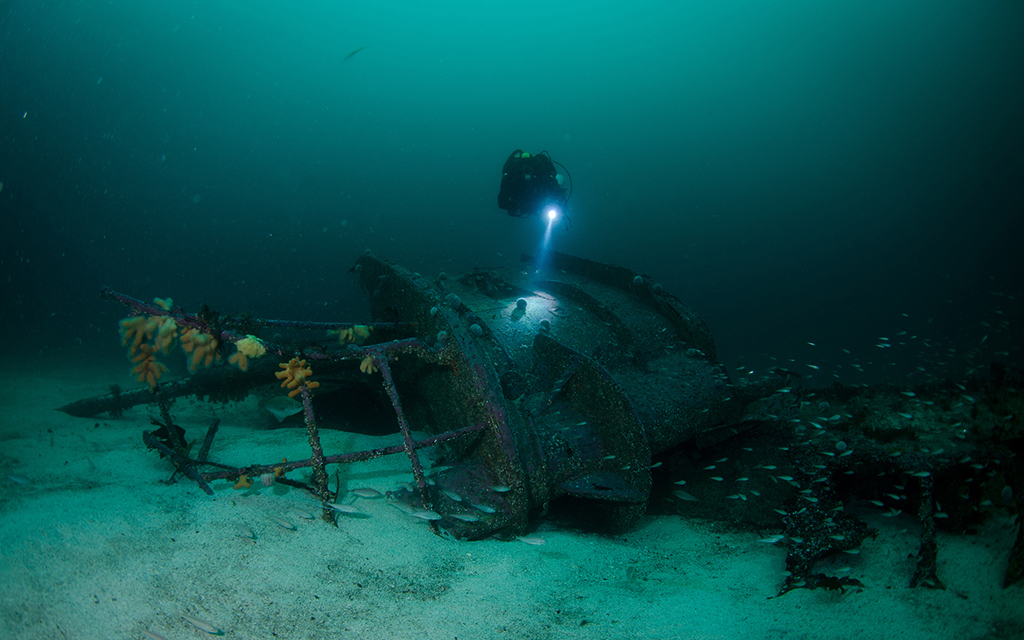
Wreck of the E-49, Shetland - Photo credit: © Bob Anderson
BSAC has liaised with the Royal Navy to help divers understand that proposed changes to the Protection of Military Remains Act aim to add greater protection to military wrecks to ensure our underwater heritage is preserved.
As part of a new Armed Forces Bill currently passing through Parliament, updates have been proposed to the Protection of Military Remains Act (PMRA) 1986.
At present, for military wrecks to be protected they need to be designated on the PMRA Schedule as either a Controlled Site or a Protected Place. This parliamentary procedure takes a long time and leaves wrecks vulnerable in the interim. Whilst most divers these days are respectful and recognise the ‘look, but don’t take’ principle, there is still a minority that participate in the damaging and salvage of wrecks.
The proposed changes to the PMRA intends to remove this vulnerability by automatically applying protection. It will mean that all military wrecks not currently designated, including vessels that were in service with or being used by the Armed Forces at the time of loss, will automatically be considered a Protected Place. This means that divers will still be able to visit these sites, but unauthorised salvage and entry into the enclosed interior of the vessel is prohibited. The proposed changes also intend to remove the 200-year time limit, which currently means wrecks older than this have no protection.
The current version of the PMRA also designates a small number of wrecks as Controlled Sites, which mean they are off limits to divers unless they have applied for a licence from the MOD. The proposed changes do not affect this part of the PMRA, and there is no intention to increase the number of wrecks designated as a Controlled Site.
Since the proposed changes came to light, concerns have been raised regarding the details, or lack thereof, and what this means for divers. BSAC have been in communication with the Royal Navy, who will publish further details in due course. In the meantime, however, they would like to reassure the diving community that these proposed changes are not intended to prevent divers from visiting wreck sites, and there is no intention to ban diving on wrecks that will come under these changes. Indeed, divers visiting military wreck sites in a respectful manner is welcomed, as it ensures they are not forgotten. The changes are being proposed to ensure that the wrecks are better protected from salvage and can therefore be preserved for future generations. It will also hopefully mean that the locations of newly discovered military wrecks can be published much sooner, as protection for those wrecks will be automatically in place.
Whilst the proposals will vastly increase the number of vessels that receive protection via the PMRA, the practice of diving on a wreck that is a Protected Place is already well established. For example, two well-known and regularly dived UK wreck sites are already designated as Protected Places; HMS M2 in Lyme Bay and HMS E49 in Shetland. This designation has not prevented divers visiting these sites, nor has the use of shot lines been an issue.
BSAC understand there are concerns and that some areas need to be clarified. We will continue to liaise with the Royal Navy, with the intention of producing a set of Q&A which will hopefully alleviate these concerns. In the meantime, divers can be assured that these changes are not intending to put wrecks off limits or to criminalise respectful divers, but are simply aimed at giving our underwater heritage better protection. For more guidance on respectful wreck diving, please see the BSAC Respect our Wrecks Policy.
If members have thoughts on this issue they wish to share, please contact BSAC HQ by emailing wreckaccess@bsac.com


