The BSAC Sidemount Diver course is a newly developed skill development programme designed to train already qualified divers in the safe, efficient, and confident use of sidemount configuration.
Splitting sidemount diving from the Twin-set Diver SDC represents a shift toward a purpose-built training standard.
Using a sidemount system isn’t as simple as independent back mounted cylinders – the fitting, adjustment and configuration of the equipment is far more critical to ensure a balanced, streamlined and safe system.
- Alex Warzynski, Technical Chief Examiner
- Minimum diver grade BSAC Sports Diver or equivalent
- Current BSAC Member
- Be medically fit to dive
- Hold BSAC gold or black buoyancy grade
A key feature of the course is its specific focus on sidemount configuration and diving practices. This includes detailed attention to equipment selection, hose routing, cylinder management, buoyancy control, and trim, all tailored to the sidemount environment. The course also emphasises redundancy, self-sufficiency, and problem-solving, while maintaining the importance of the buddy system and adherence to BSAC Safe Diving guidelines.
The design philosophy reflects modern sidemount diving practices, highlighting its advantages such as increased gas redundancy, improved balance and trim, streamlined profile, and adaptability for a wide range of diving environments. At the same time, the course addresses the added complexity of sidemount systems, ensuring divers develop the discipline and precision required to manage them effectively.
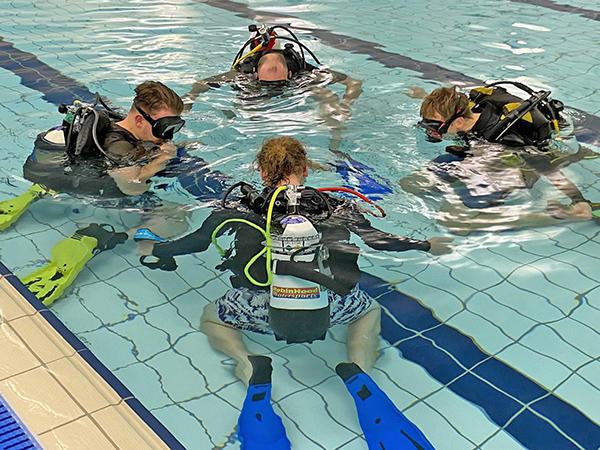
The course is structured to provide a progressive and integrated learning experience, combining classroom theory, dry practical sessions, and in-water training. It begins with core knowledge covering sidemount philosophy, equipment configuration, and failure management, ensuring students understand not just how to dive sidemount, but why specific approaches are used. This is followed by dry practical sessions where divers configure equipment and rehearse key drills, reflecting the increased complexity and importance of correct setup in sidemount systems.
In-water training then develops these skills in a controlled and progressive manner, starting in sheltered water before moving into open water for consolidation and assessment. Throughout, there is a strong emphasis on continuous assessment rather than a single final exam, ensuring divers build competence and confidence step-by-step. By the end of the course, divers are expected to safely plan and conduct dives using sidemount configuration, manage gas effectively across independent cylinders, and respond to both routine and emergency scenarios.
Not a member yet?
- Enquire now to get started
Members:
- Option 1: Train with your club - buy the digital training pack or eLearning in the BSAC Shop
- Option 2: Book onto a scheduled Sidemount Diver Course
- Option 3: Train with a BSAC Training Centre
Your next steps – developing your skills
After completing Sidemount Diver and consolidating your skills, you have new diving options:
- If you want to use the primary donate (PD) method in an out-of-gas situation, you can take the Primary Donate Workshop within your club or region.
- You can develop your decompression diving skills on an Accelerated Decompression Procedures (ADP) course.
- Progress to Sport Mixed Gas Diver (50m) after completing ADP and enjoy the benefits of reduced gas density and narcosis, which ensure greater comfort and enjoyment at these extended depths.
- You could develop specific skills to expand your diving interests further. Imagine understanding more about wreck diving, driving a dive boat or becoming an underwater photographer. Check out the Skill Development Courses (SDCs) you can get involved in.
- You could sign up for BSAC’s Instructor Foundation Course (IFC) to become an Assistant Diving Instructor, or develop your existing skills as an Open Water Instructor, or above, to become a Twin-set Diver Instructor.
Not yet a BSAC member?
You can do this course by joining BSAC directly or joining your local club.
If you need a hand send us an enquiry and we'll help you find the right scuba club for you.