First Class Diver is BSAC’s highest diving grade, so would a prep/exam event in the Red Sea do it justice? Recollections may differ...
The Examiner’s story
By Dave Sydenham, BSAC National Instructor and First Class Diver Examiner
First Class Diver (FCD) takes a lot of skill, experience and dedication to achieve. It’s not easy to pass and really stretches all those who put themselves forward for it.
It is often said ‘there is no reward without challenge’, and that’s certainly true of First Class. It can be extremely challenging, but also rewarding for those who achieve it. Whether they pass or not, those attending the preps and putting themselves forward for the exam are exposed to new ideas, improve their skills and knowledge, and become better divers. As examiners, we learn loads each time we work on these events, and never more so than on First Class, where the calibre of the candidates is generally very high.
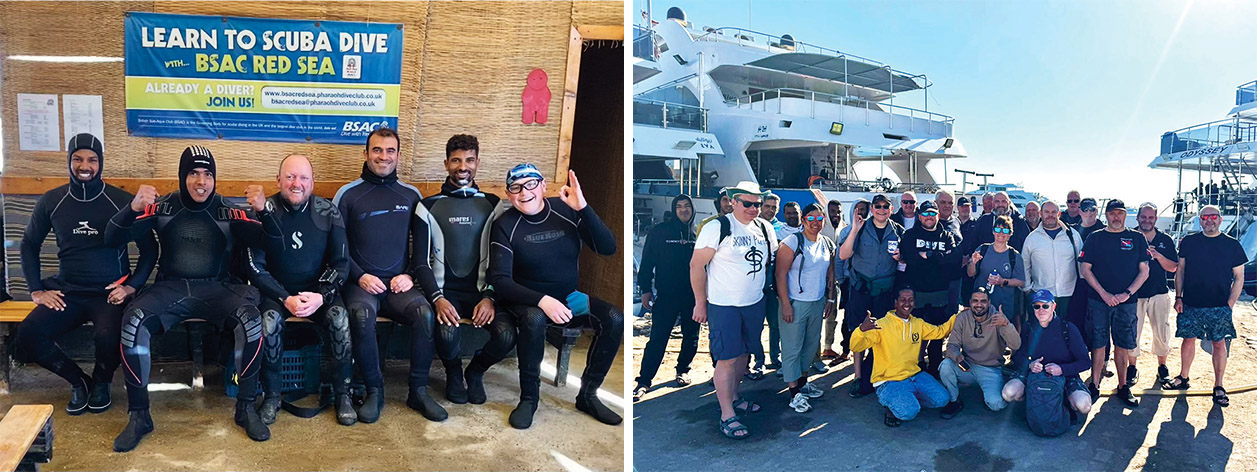
An instructor crossover course was also held during the trip | Full team photo
This event was unlike any other First Class I’ve had the pleasure to examine. The candidates decided to organise the event in the Red Sea, whereas we are used to wet, windy weekends in the UK. Well, you can take First Class out of the UK, but it would seem you can’t take UK weather out of the First Class.
Some might have thought that choosing to do the exam overseas in clear warm water would be an easy option, but the weather was as challenging as the UK. The small boats weren’t quite as well equipped as candidates might be used to (no echosounders or GPS) and of course, as examiners, we weren’t going to make it any easier.
It was an unusually large event, with 10 candidates. As examiners, we manage the examination of each candidate through 12 Assessment Areas. We had to ensure we were seeing enough of each candidate, and in each Area, to be able to fairly assess and write comments for their exam report. Due to limitations imposed by the weather, we had to do an additional piece of boat work back in Hurghada harbour in order to complete the Seamanship and Practical Position Fixing sections. As ever on First Class, the need for adaptability and flexibility is crucial.
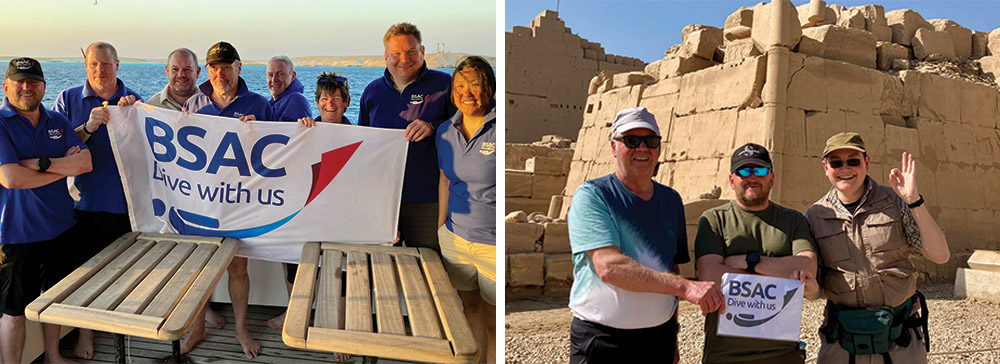
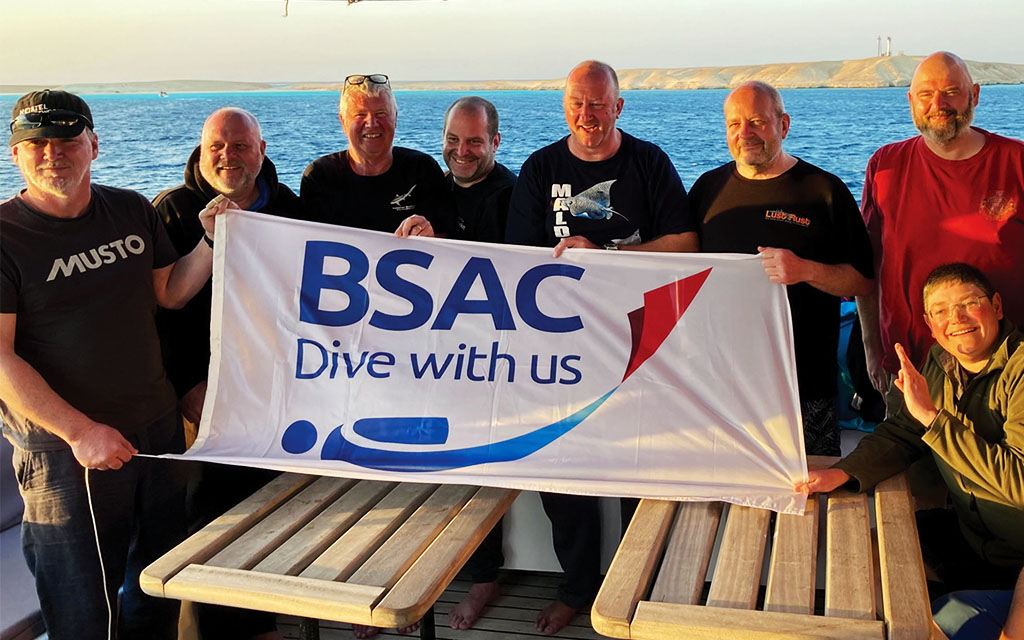
The Examiners | A visit to the Temple of Karnak
The team demonstrated that flexibility during the project section of the exam, while carrying out a survey of a T34 Tank. Several groups found they needed to work around a resident lionfish, who was definitely not going to move out of their way. That’s something I’ve never come across while running First Class Exams in the Clyde! There are no problems though, only opportunities, and the candidates took this mantra on board as they produced a fantastic project report complete with sketches, photographs, diagrams and photogrammetry of the tank, along with a good analysis of the survey techniques employed.
Doing a full six-day event was demanding for everyone, but it was amazing to see just how much all the candidates progressed over this time.
As ever, we found our candidates were often capable of far more than they initially believed. We said we would push them hard to get the very best out of them; it certainly wasn’t a holiday. Some may have found being stuck on a liveaboard for a week with a bunch of First Class Diver Examiners a bit of a challenge; and maybe a little stressful at times. Still, I hope they will look back and realise that, yes, they did actually enjoy it, just as we said they would. This is what is known as ‘Type-2 Fun’!
Candidate’s perspective
By Leon R Smith, Advanced Diver and Assistant Instructor Trainer
The decision to relocate one of the largest and most complicated events in the BSAC Diver Training Programme 2,500 miles from the UK was an ambitious challenge. As a candidateled event, we were all jointly responsible for arranging the necessary accommodation and obtaining access to suitable dive sites for preparation and the practical exam.
We also needed to procure all the equipment necessary to facilitate the kind of ‘adventurous diving’ required to meet the 12 assessment criteria for ‘First Class Diver’, including an echo-sounder, VHF radios, and a handheld GPS. However, the chance to navigate RIBs around the wrecks of Abu Nuhas and have our marine life surveys interrupted by curious dolphins at Sha’ab El Erg was too good to pass up!
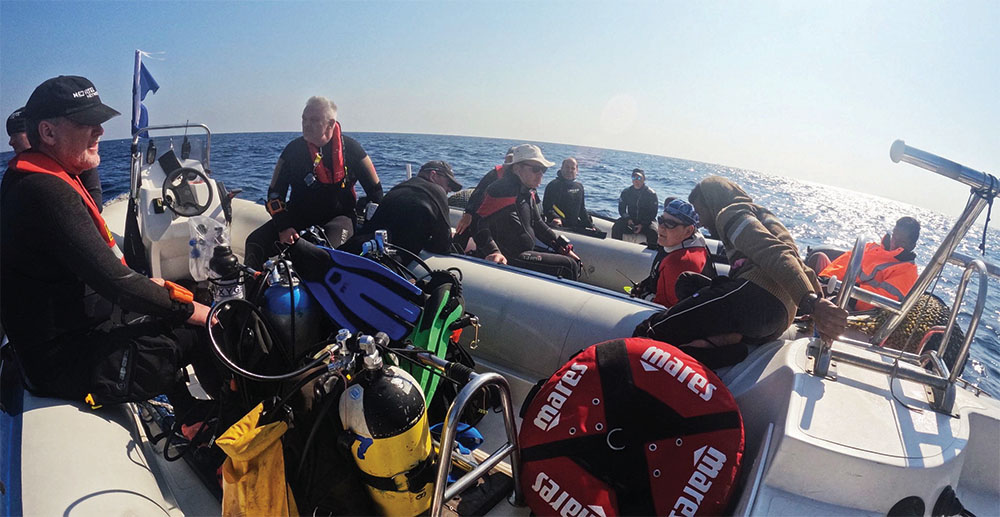
Zodiac diving in progress
Planning began more than a year in advance, once we had confirmed permission from the FCD Chief Examiner. This continued right up until a few days before, as we were able to acquire some offcuts of scaffolding pipe locally to put together a home-made decompression trapeze! Along the way, we picked up local charts and compiled a database of suitable sites in the area, which were plotted onto Navionics software loaded onto tablets.
The unusual nature of the event attracted considerable interest, with a total of ten candidates eventually making the trip to Egypt along with eight National Instructor examiners. Our base of operations for the week was the liveaboard MY Big Blue (run by Pharaoh Dive Club) operating out of Hurghada. This provided space for planning and briefings, as well as catering and gas fills. However, the diving itself was mainly undertaken using three small RIBs with up to six divers in each, so not unlike the situation would have been for club diving in the UK.
Some of the candidates were able to meet up before the exam during various UK-based preparation events. We also joined in with others in face-to-face planning sessions and meeting online for regular zoom meetings. Working documents were shared online and regularly updated with risks assessments, kit lists, and task allocations.
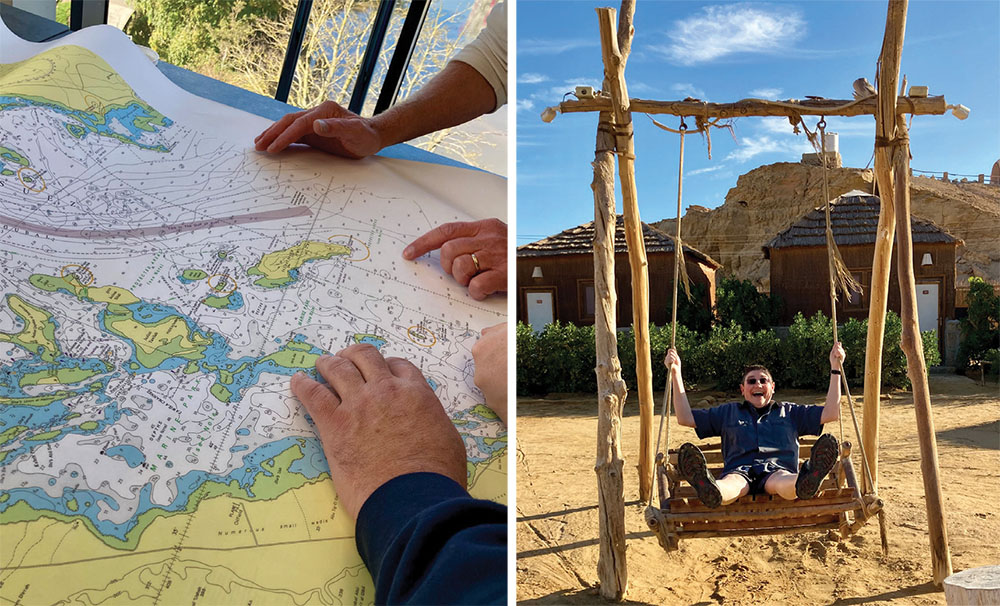
Chartwork in progress | Leon swinging at Roots
Some of the candidates and examiners travelled early for some sightseeing and pre-diving on location in Egypt to perfect their buoyancy and trim at Roots Red Sea camp near El Quseir. As well as dry-running some measured survey techniques around the poolside, we also met up with former BSAC Chair Clare Peddie, who offered an impromptu marine life survey masterclass.
Excellent personal diving and dive leading skills were a prerequisite, however our first few attempts at project planning and execution between ten different experienced and highly-qualified divers resulted in scenes that would not have been out of place on TV’s The Apprentice. But after a few days we settled into an efficient unit ready to face whatever the examiners (and the circumstances) would throw at us.
Working as a team, we were able to overcome changing sea conditions, mechanical issues (including a slowpunctured RIB), a ‘man overboard’ situation, and numerous emergency scenario drills - generally involving BSAC’s National Diving Officer Sophie Rennie cooking up a whole variety of medical mishaps and diving incidents. We certainly put the ‘adventure’ into ‘adventurous diving’ - taking the best of BSAC out to warmer (but no less challenging) waters.
Candidate’s story
By Alex ‘Woz’ Warzynski - BSAC Technical Chief Examiner and Technical Instructor
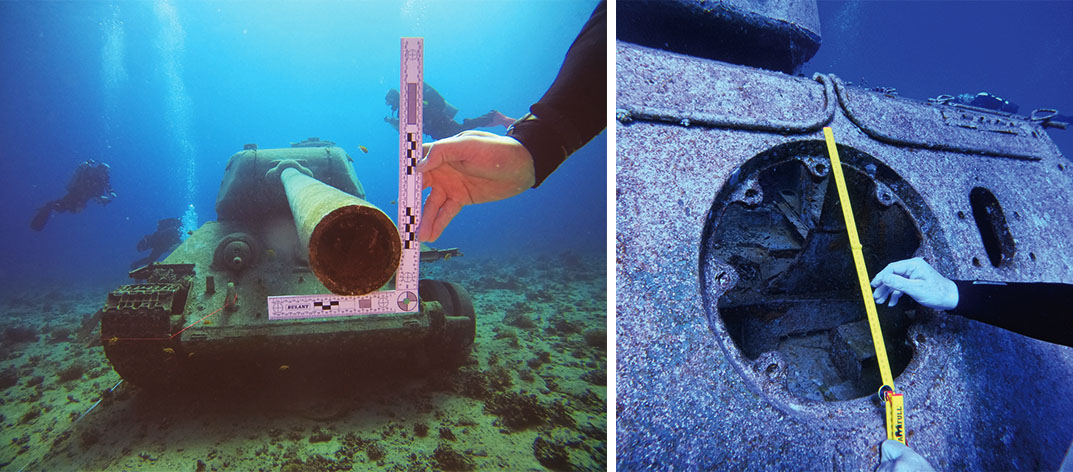
The T34 Tank survey project
I’ve been putting off the First Class Diver exam for about 15 years, so when a friend of mine said that he was planning to do an event in marginally warmer, but mainly clear waters, I thought that maybe it sounded fun.
However, instead of turning up to the exam with absolutely every bit of kit that I own, a mile of rope and more buoys than a fishing boat, we had to work out how to get everything we needed out to Egypt in a couple of 23kg hold bags.
As reflected in the recent press, the standard of boats out in the Red Sea is a bit different to the UK. So, cue browsing AliExpress for some VHF radios, and eBay for a handheld GPS. One enterprising candidate mackled up an echo sounder using some Tupperware as a battery box and a GoPro stick to dangle the transponder over the side. Very cool! We even took out first aid kits, but had to draw the line at flares, as getting them through the airport might have been a challenge.
The planning started well in advance, with the candidates using shared online resources to organise equipment so we didn’t duplicate too much. Trying to source GPS marks was tricky as the dive guides tend to use transits, but with a bit of persuading and harvesting from divers who were travelling out there, we managed to produce quite a large database of potential sites and safe mooring locations. A few were even located by spending a bit of time browsing Google Earth and spotting where the boats were moored up!
The event itself was four days of prep and a two-day exam. With 10 candidates, it was a large group to organise and at times it became somewhat heated, but once we had sorted out our strengths and weaknesses, we gelled into a pretty effective team. The exam was busy, as the examiners wanted to see everyone do a bit of everything, so on reflection, splitting the group down into two fives would probably have been easier.
We were tasked with an ‘adventurous’ dive, which was challenging as we weren’t familiar with the location and had to shift from the wreck we thought we were diving, to a different one. The next day, we had a project dive, which involved lots of measuring and sketching of a T34 tank.
This was right up my alley, as it’s part of my day job taking accurate measurements and making things to fit. We backed this up with some photogrammetry, which worked out tremendously well. We wondered if we’d have been better just plopping in with 10 GoPros and modelling the thing instead of messing with string and tapes.
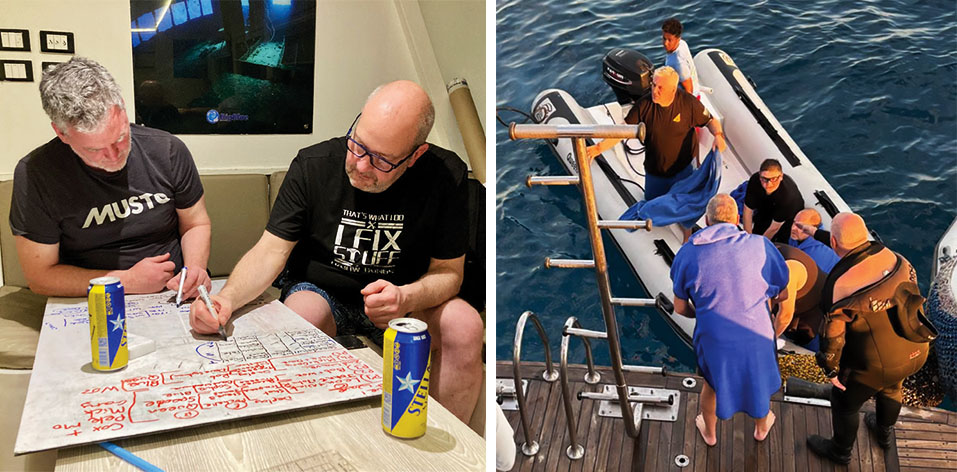
Dive planning | Rescue management
Sophie Rennie, the National Diving Officer, would regularly test us by falling off the boat, or tripping over, or getting DCI. It was tempting to lock her in her cabin with a packet of crisps and some Egyptian Stella, but we all mucked in to manage the staged incidents using the resources we had on board.
Examiners would probe our knowledge covering medical, seamanship, dive management, tying a knot or two and really testing the extent of our knowledge. If you’re well-dived up and well-read, it’s well within an experienced diver’s capability. I did offer to give one examiner an hour’s lesson on bubble mechanics, but was politely declined.
Would I recommend doing First Class this way? Unlike Leon – probably not. The challenges of running the event remotely led to a layer of stress that could have been avoided by doing it locally, although the warm, clear waters made the actual diving part nice.
Footnote from NDO Sophie Rennie
We are always looking to test out new ways of running courses and exams. Well done to all the candidates who took part and made this event happen. I’d call it plantastic – but that word probably doesn’t exist!
This Learning Curve article was originally published in SCUBA magazine, Issue 158, September 2025. For more membership benefits, visit bsac.com/benefits.
Images in this online version may have been substituted from the original images in SCUBA magazine due to usage rights.