In another entry from SCUBA magazine's 2025 writing competition, A Dive to Remember, David Horley recalls a dive in perfect conditions on the wreck of the Afton, off the Isle of Man.
Briefing:
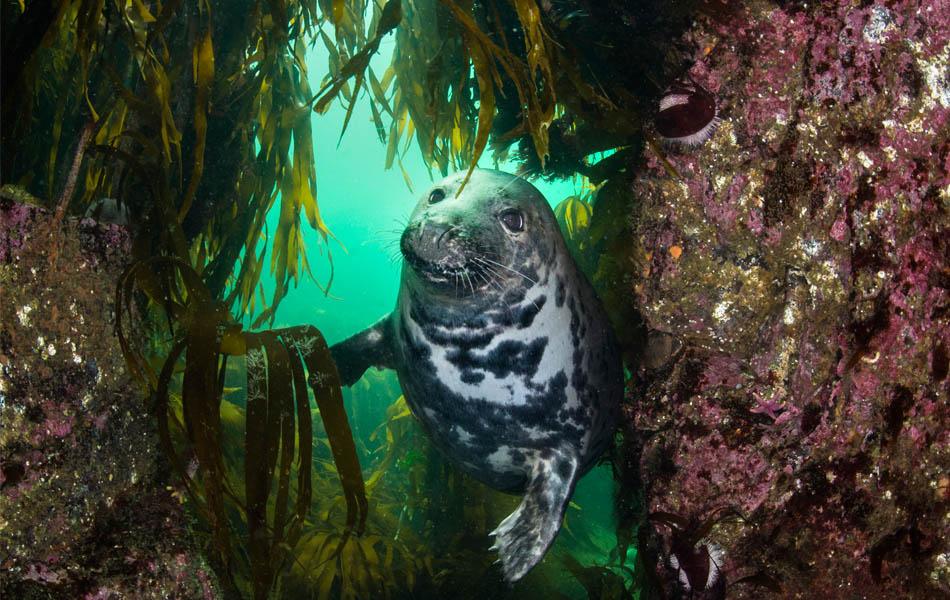
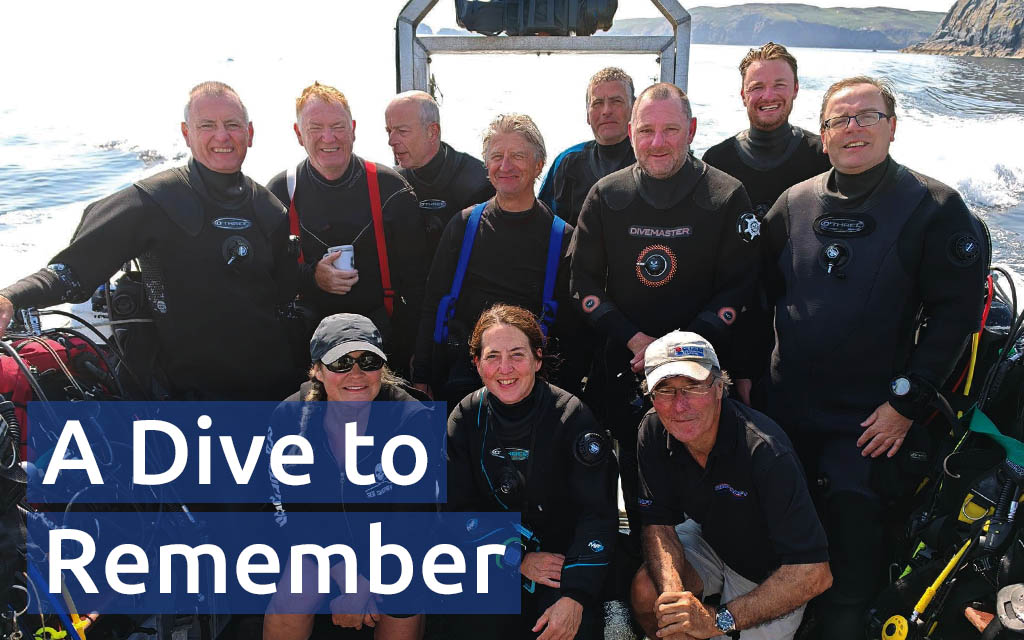
In July 2024, nine members of Carlisle Sub Aqua Club dived the Afton wreck, approximately 1.5 miles off the coast of Santon Head, Isle of Man. Despite being very broken up, the wreck has an abundance of biodiversity including kelp, sea sponges, cat sharks, sand eels, conger eels, cuckoo wrasse, blue jellyfish and more. Aside from the interesting wreckage and critters, the visibility we experienced was world class!
The dive:
As with most wrecks, we waited for slack water and then descended the shot line to about 25m. We weren’t far down before we could see the wreck, as the visibility was truly exceptional (I’ve since dived the Great Barrier Reef – which wasn’t as clear as this!). The Afton is rather broken-up, but lies on pristine white sand which really highlights the shape of the vessel.
We witnessed several large cat sharks resting down there, seemingly unfazed by divers. The cuckoo wrasse weren’t shy either; these vibrant fish come right up to you, so close that most my photos were out of focus! There were some conger eels lurking in the darker parts of the wreck. The congers were a considerable size, but generally retreated to their crevice if you got too close. We were fortunate to see some schools of sand eels circumnavigating the wreck; this was made even more mesmerising by divers’ torches glowing behind them.
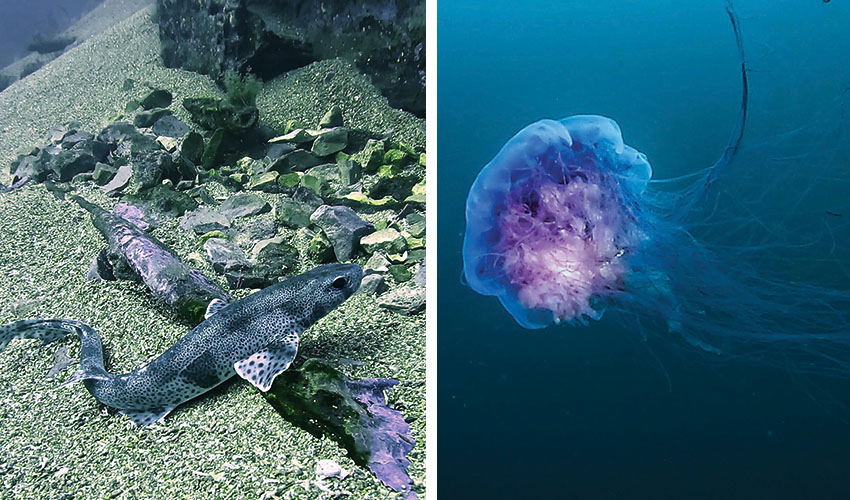
David’s photo of a small spotted cat shark on the Afton site | A visit from a blue jelly
To get the most out of this dive, go slow! Keep your eyes focused on one area and you’re sure to see something interesting. Try to keep your fins up and not stir the sand, although the sand is more forgiving than silt, so shouldn’t be too much of an issue for any divers behind you.
If you’re planning some multi-day diving in the Isle of Man, try to dive the Afton on the calmest, clearest day so you have a chance to experience the incredible visibility that we had. At 25m, you can have a lengthy dive on air. You will need to ascend on a dSMB to avoid dislodging the shot, as it’s not fixed. Divers should be wary of sharp, rusty edges and be on the lookout for jellyfish, especially in the warmer months.
Debrief:
This is a dive that has it all: a wreck, lots of life, great visibility and white sand – something we’re not always so lucky to see in the north!
Share your scuba (or snorkel) story!
We want to hear from YOU. Tell us your scuba (or snorkel) story - how you got into the sport and what brought you to BSAC. Whether you were already trained with another agency, started as a young snorkel diver or found us later in life. Email your story to marketing@bsac.com with the subject 'My scuba/snorkel story' and some pictures and yours might be the next story we share!
This article was originally published in SCUBA magazine, Issue 158, September 2025. For more membership benefits, visit bsac.com/benefits.
Images in this online version may have been substituted from the original images in SCUBA magazine due to usage rights.