
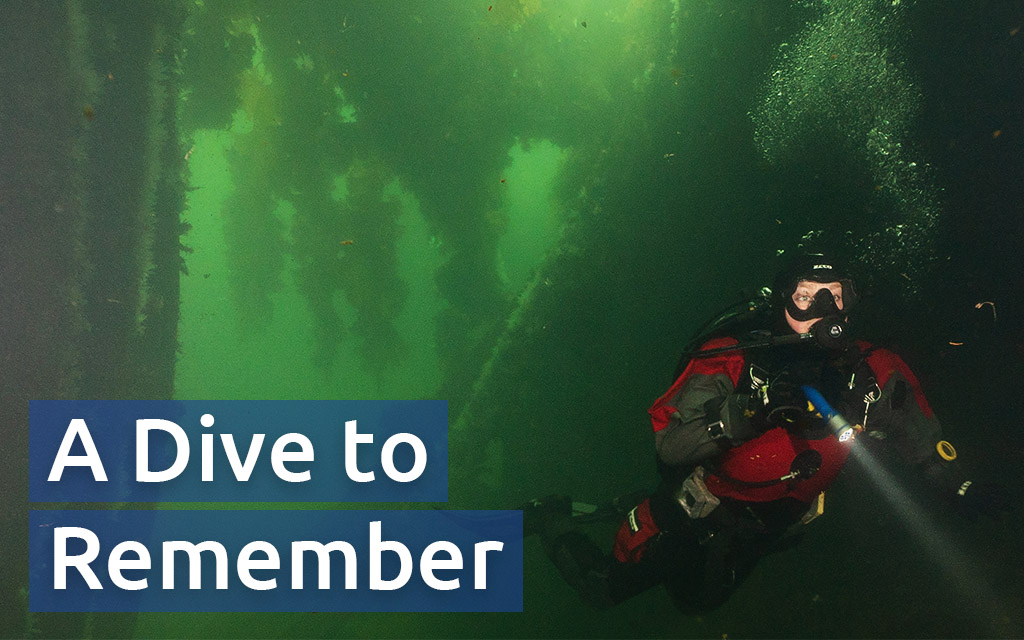
In another entry from SCUBA magazine's 2025 writing competition, A Dive to Remember, Richard Hill recalls an atmosphere-loaded dive on HMS Port Napier, a shallow but spectacular wreck between Skye and the Scottish mainland.
Briefing:
A dive to remember, one that has spurred me into sidemount diving, is the HMS Port Napier. This magnificent site is enticing even from the surface. Along much of her 152m length, her port side juts from the cold, clear waters of Loch Alsh.
The dive:
We descend beneath the stern railing past one huge opening in the hull to stop at a second deeper (but still only at 16m), darker opening. From these hatches, sea mines were to be launched in defence of wartime Britain. These gaping maws are now lined with brittlestars and tunicates and orange-and-white soft corals that beckon us in.
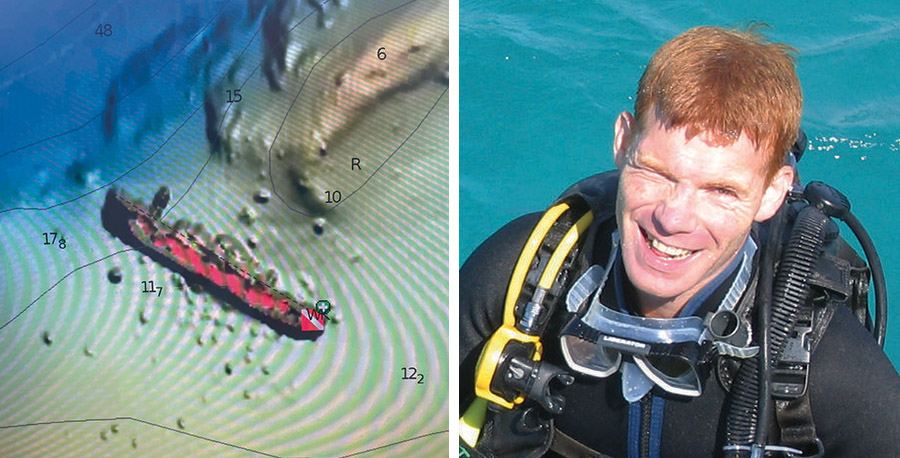
Left: A scan of the wreck; right: Richard Hill in full kit and bright sunshine
In the tunnel beyond I can feel the weight of the ship around me, eliminating the gentle current and absorbing the sound of our outboard. In the green tinted light I can see one side of the tunnel houses a narrowgauge railway, the means of transporting the mines through the ship. Further in, the shadows are deeper and darker and the corals and tiny starfish become less abundant. However, the Dive Leader’s probing torch beam reveals plenty of wrasse, speckled and mottled, pecking at unseen molluscs.
My torch is good only for signalling and the battered, neck-entry drysuit needs new cuffs, but my enthusiasm is not dampened.
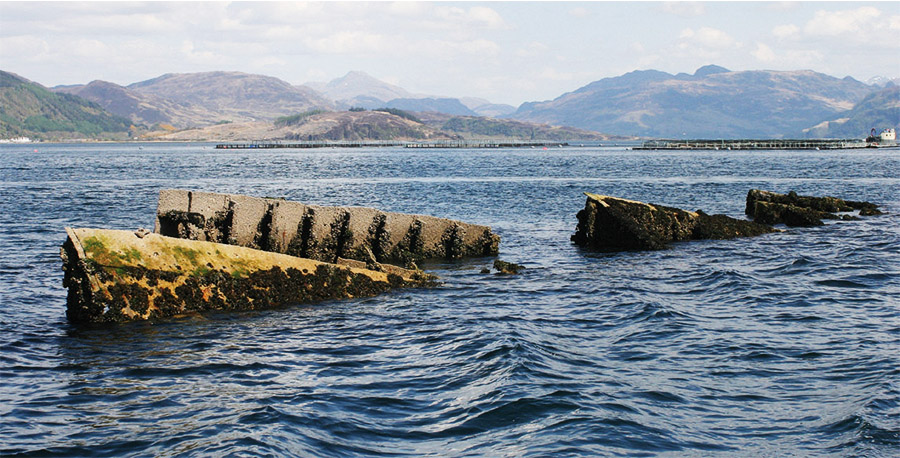
The sunken HMS Port Napier
I love the thrill of exploring inside this iron odyssey. We fin along the tunnel rail lines for 40m, pausing to investigate mechanical structures, a squat mine trolley and a stream of bubbles that hints at a hidden occupant. A couple of huge, uninterested pollock share one of the side rooms with us. In another a gaggle of urchins bristle, black spines stark against the ochre of rusted iron. My buoyancy is pretty good but I can’t seem to mimic the Dive Leader’s imperceptible fin kicks and quietly chastise myself at each fingertip touch of the iron work.
We pop out among a mass of twisted metal drenched in a deep layer of silt. These ruptured structures are what remains of the engine room after an unexplained fuel explosion ripped through it in 1940. Remarkably, the adjoining wheelhouse, adorned with glowing tube anemones, is still intact. We follow our plan to swim along the port side mine tunnel to the stern. It is shallower and less enclosed; home to clumps of plumose anemone bathing in the Scottish sun. At intervals I can easily see to the exterior and I watch a dogfish weaving through sugar kelp on the hull.
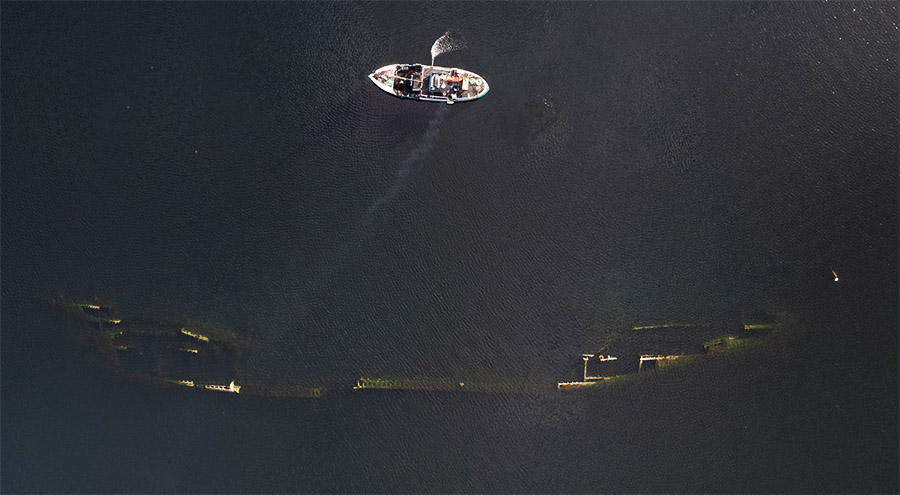
Aerial perspective of the Port Napier
Debrief:
Later we hear that another buddy pair encountered a seal under the bow. I wasn’t envious. Animal encounters are an absolute thrill, but it was experiencing Port Napier from within that gave me a dive to remember.
Share your scuba (or snorkel) story!
We want to hear from YOU. Tell us your scuba (or snorkel) story - how you got into the sport and what brought you to BSAC. Whether you were already trained with another agency, started as a young snorkel diver or found us later in life. Email your story to marketing@bsac.com with the subject 'My scuba/snorkel story' and some pictures and yours might be the next story we share!
This article was originally published in SCUBA magazine, Issue 159, October 2025. For more membership benefits, visit bsac.com/benefits.
Featured image credit: Rohan Holt
Images in this online version may have been substituted from the original images in SCUBA magazine due to usage rights.


