In another entry from SCUBA magazine's 2025 writing competition, A Dive to Remember, Marine biologist and author Dr Keith Hiscock recalls a once-in-a-lifetime visit to a remote outpost of UK territorial waters.
Briefing:
I am feeling a little bit seasick and, no wonder, we are more than 300km west of St Kilda and looming out of the Atlantic swell in front of us is the 17m high rock of Rockall. It is June 1988 and we have been fortunate in having colleagues able to arrange a lift on the Fisheries Protection Vessel Norna, plus the hire of a recompression chamber to weld to the deck.
The dive:
We were lucky – the sea was glassy calm but the swell was significant. Our kit was ‘standard 1980s’ (drysuits, open circuit breathing equipment but newfangled dive computers – Orca Edges). The computers allowed us (on air) to dive to a maximum of 46m depth before working our way up the steep rock slopes without getting into decompression.
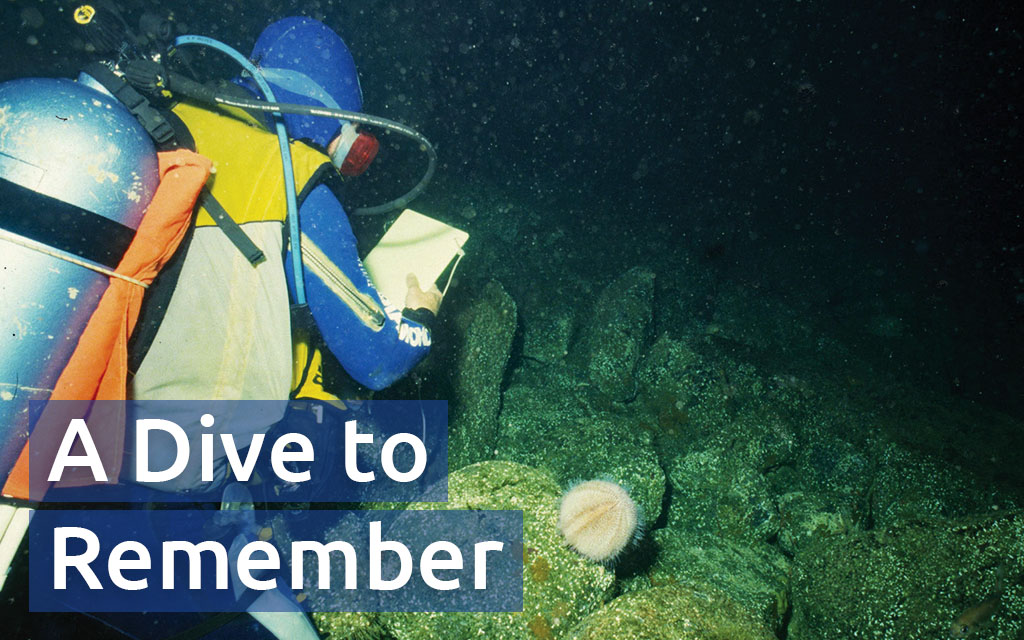
The dive on 29 June was the best of our visit – two of us descended to the deep boulder tumble before working our way up the steep reef scribbling on our writing boards, collecting specimens and taking photographs. There were familiar species such as jewel and other anemones with many sea firs, sea squirts and sponges with their associated nudibranchs.
All of this made the dive colourful as well as ‘special’. Well, this was the most wave-exposed site you could ever expect to dive. Kelp extended to more than 30m depth and there was the normally very shallow species Dabberlocks (Alaria esculenta).
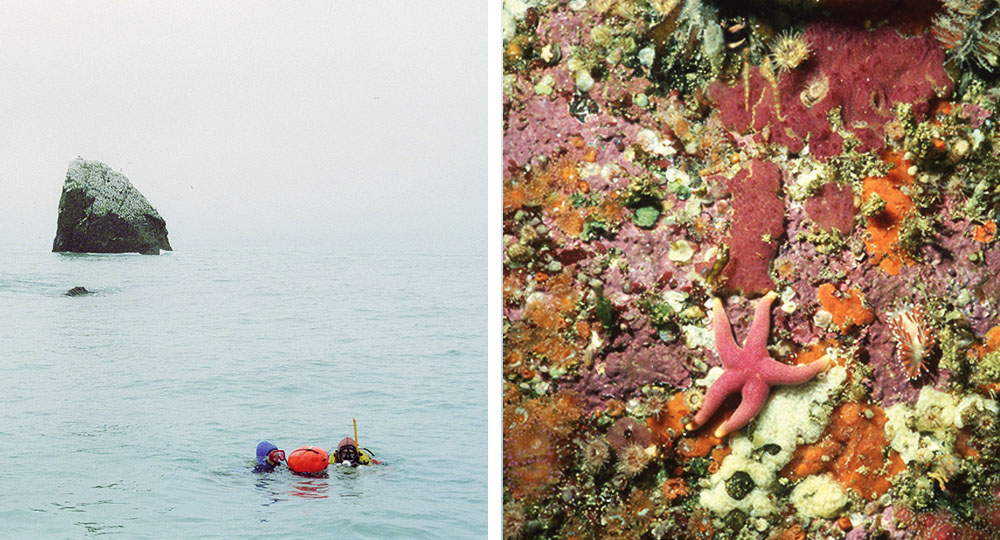
L: The lonely outpost that is Rockall
R: Sponges, anemones and sea squirts dominated the reef
The issue we faced on this dive was deciding what to do about the attendant porbeagle sharks. The first sign of their presence came when I looked to check my buddy and all I could see were bubbles coming out of the kelp – he had ducked in there out of sight. The sharks just seemed curious and we got on with recording before eventually surfacing and shouting urgently to the cover boat: “We’ve got sharks!”
There was much more to the trip than our dives. The ‘fun’ bit was landing on the rock, which involved being pushed forwards on the bow of an inflatable boat by a RIB and jumping onto the rock at the top of the swell so that we could make the difficult climb to the top via surveying the intertidal marine life.
Debrief:
We were not the first to dive Rockall – Inverness BSAC had made it there on the Jean de la Lune the year before. I would love to return to Rockall, but the likelihood of getting such good weather and support seems slim – let others try – there are still questions about the marine life at this isolated and storm-swept location to answer.
Share your scuba (or snorkel) story!
We want to hear from YOU. Tell us your scuba (or snorkel) story - how you got into the sport and what brought you to BSAC. Whether you were already trained with another agency, started as a young snorkel diver or found us later in life. Email your story to marketing@bsac.com with the subject 'My scuba/snorkel story' and some pictures and yours might be the next story we share!
This article was originally published in SCUBA magazine, Issue 159, October 2025. For more membership benefits, visit bsac.com/benefits.
Images in this online version may have been substituted from the original images in SCUBA magazine due to usage rights.