Drift snorkelling harnesses the natural movement of water for a free ride. Andy Torbet sets out the planning considerations...
Keeping fit is a good thing. It helps in so many aspects of life, including snorkelling. So, when snorkelling can be combined with exercise there are a wealth of benefits. However, burning calories is not the primary aim of a good snorkel and we can use the conditions to ease our passage. In fact, the tides, currents and flow that often present, if not a hazard, then at least a factor that can sometimes be viewed as an asset.
Using the movement of the water to enable an easier dive or allow us to cover much more ground than finning alone is not a new concept. But on a snorkel, with limitless time, we can make best use of the hydro-chauffeur offered to us by nature and cover a huge amount of the submerged landscape.
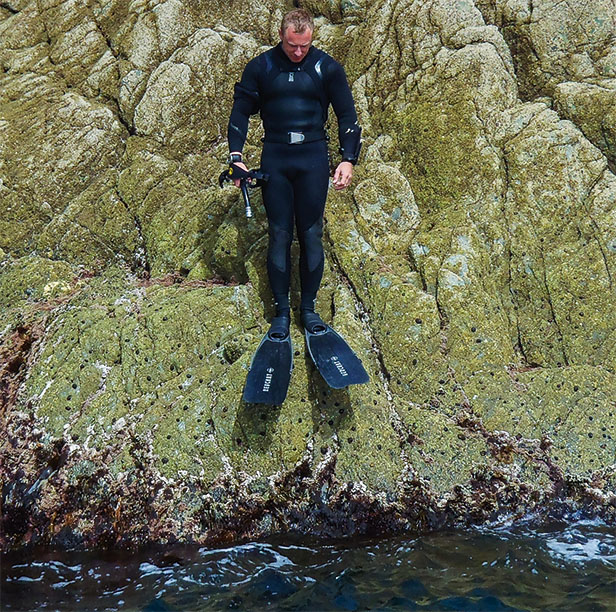
Ensure you find somewhere easy to get out even if the flow picks up
I’ve drifted over 20 miles down the Severn, miles past Brixham in Devon and along the shores of the Isle of Skye. It needn’t be that long but the assistance does make bigger trips possible. You just have to go with the flow.
As with all forms of diving, there are some things to consider when planning a drift snorkel, whether in fresh or marine waters:
Direction and speed of flow
The direction should be consistent in rivers. But not always: for instance, I live between the Severn and Wye (which has many miles of tidal river where the direction switches through the day) but the speed will change with more rainfall. I hope all readers of this magazine have at least a passing familiarity with the concept of tide going in and out!
The time of day you intend to snorkel will affect which direction you travel and how fast. Whether you are on Neaps or Spring, or in-between, will also affect the speed of movement.
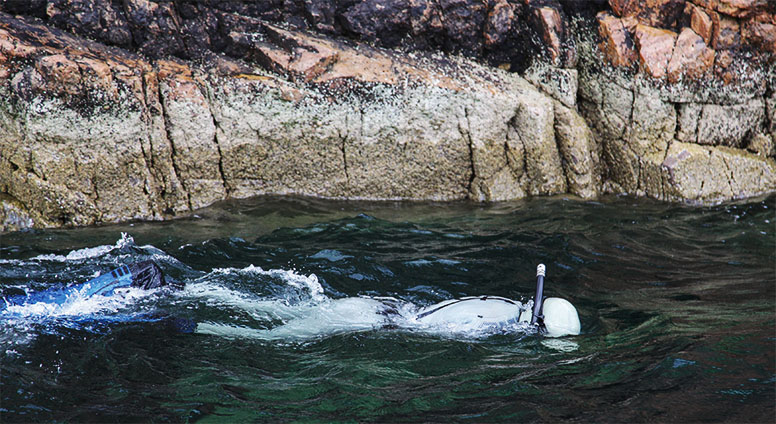
Using the tide for a free ride
Entry and egress
First you must plan your your entry point, then how long you want to spend ‘in solution’; how fast you’ll be drifting and in which direction. Then you need to plan an exit strategy. And it would be foolhardy to have just one option. If you miss your primary, or are just having a lovely time, having one or more options further downstream is essential. Having early options will also help in the event that one of your group needs to call off the snorkel for any reason.
Obstructions and hazards
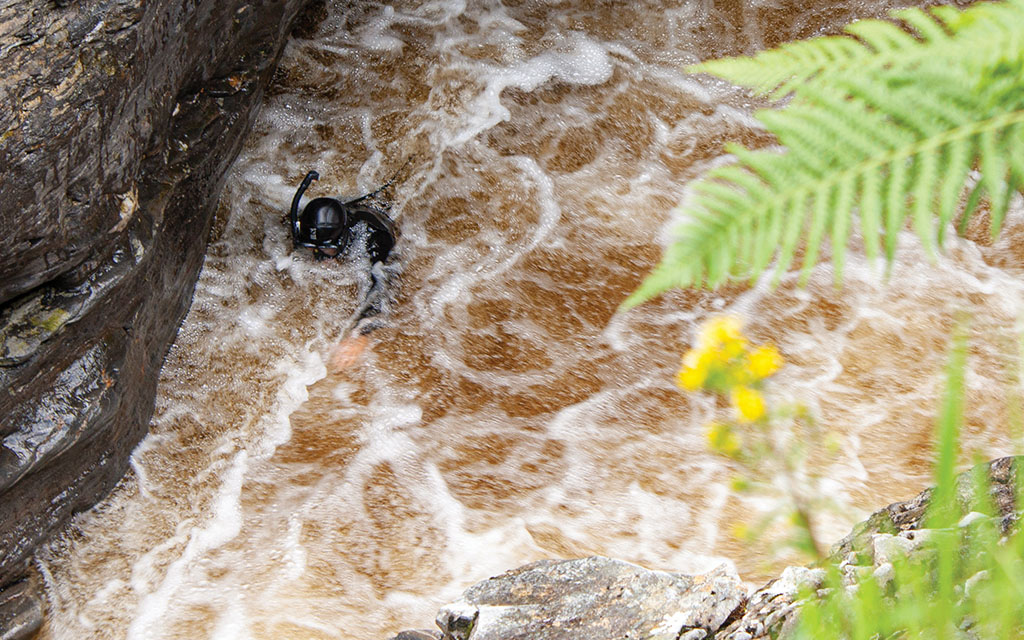
Some hazards are fixed and ever-present. Weirs are the most serious in the river environment and people die in them annually. I’m part of a River and Flood Rescue team and can testify to the dangers and near impossibility of even strong swimmers to exit large, powerful weirs. Other hazards only become dangerous at certain states of the tide or if river levels are high. The Linn of Dee is a very pleasant snorkel in dry conditions and becomes a maelstrom in wet weather.
Similarly, locations such as the Falls of Lora and many other treacherous stretches of sea are safe if navigated around slack on Neaps. If in doubt find somewhere else to dive.
Fast flowing water can be safe and a huge amount of fun, but in those conditions it’s best to keep further from rocks, walls and gullies than we otherwise might. Even a 7mm hood doesn’t afford that much impact protection.
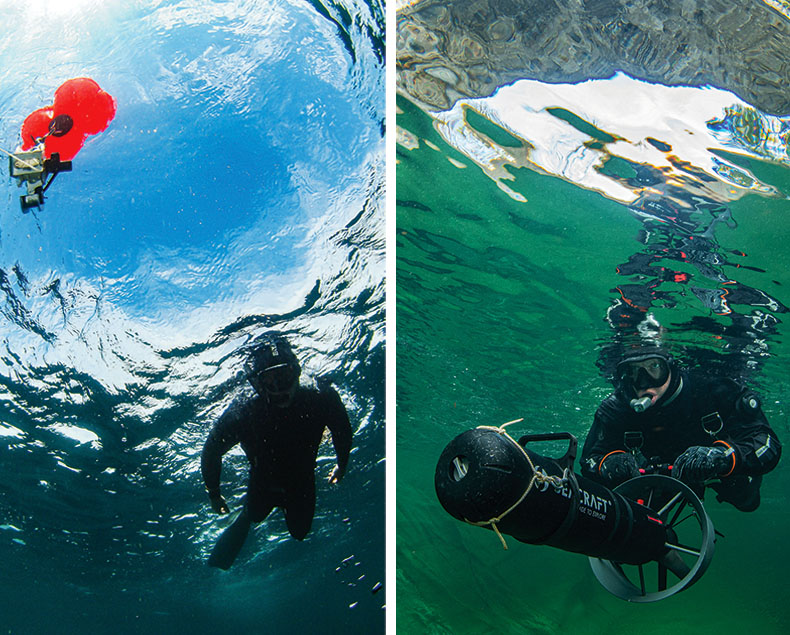
A surface marker buoy will mark your position | Scootering upstream to drift back
Warmth
Drifting is less effort than finning; in fact, it’s one of its advantages. However, this joyous lack of effort also means we won’t be generating any heat, so consider one size thicker wetsuit, or shorter in-water times.
Surface marker buoys
SMBs are almost always a good thing, and the benefit of Drift Snorkelling is they come along for the ride – you don’t need to tow them. So, you can go big. We’ve even used little rafts and filled them with snacks and cameras.
For more information on snorkelling with BSAC
Go to bsac.com/snorkelling
Looking to introduce snorkelling into your club? Find out more at bsac.com/snorkellinginstructor
If any of you have any suggestions, I’d love to hear them. Drop a note to me through the editor’s email at SCUBA or on my social media below:
Facebook: OfficialAndyTorbet
Instagram: @andy_torbet
Twitter: @andytorbet
Article by Andy Torbet for SCUBA magazine, Issue 159, October 2025. For more membership benefits, visit bsac.com/benefits.
Images in this online version may have been substituted from the original images in SCUBA magazine due to usage rights.
 Author: Andy Torbet | Posted 03 Aug 2026