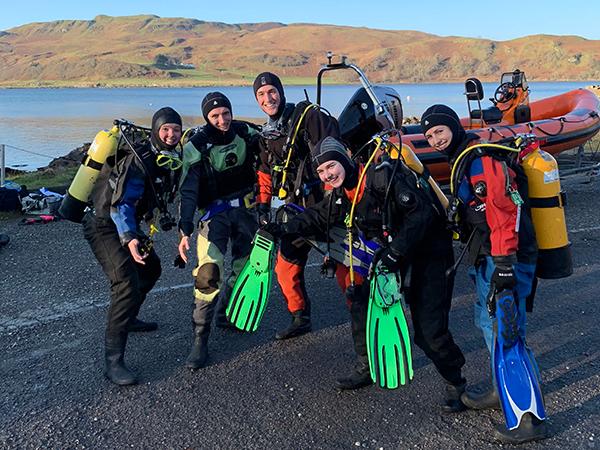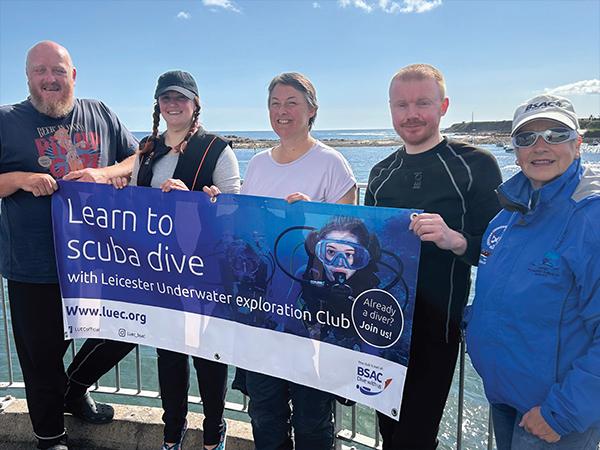
You can already dive. A club is what turns that into diving you actually do — buddies, boats, gas, pool time and a reason to be in the water in February.
1. People to dive with
The hardest part of diving isn't the diving. It's finding someone who's free on the same Saturday, wants the same site and is happy at the same depth.
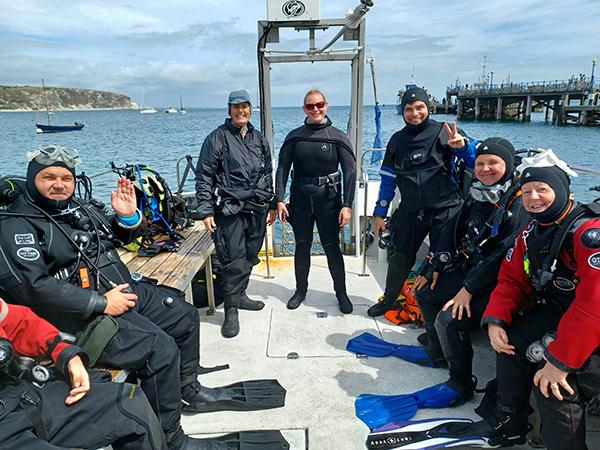
A club solves that. There's a dive calendar, a club night, a WhatsApp group and people who already know the local sites — so a Wednesday evening shore dive, a weekend on the coast or a week away happens as you can be part of it.
Most members will tell you they came for the diving and stayed for the people.
2. Kit you'd struggle to justify on your own
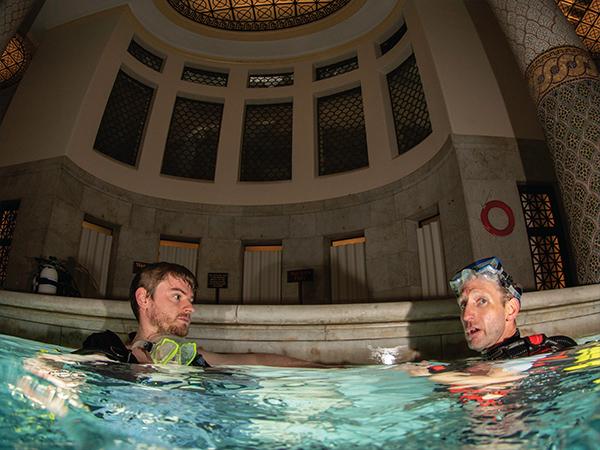
Club boats and RIBs. Compressors and gas fills. Pool sessions. Club equipment to borrow while you work out what you want to buy.
None of it exists to make money. A club boat is there so members can go diving, and the costs are shared between the people using it — which is why club diving usually works out considerably cheaper than the alternatives.
3. Somewhere to take your diving next
If you want to go further, the route and the people are already there.
Dive from boats — build your boat handling and work towards coxswain.
Get into wrecks — learn to find them, read them and dive them properly.
Go deeper — extend your diving safely, with the experience behind you.
Try technical diving — explore the BSAC Tech pathway.
Teach or lead — your club will help you get there.
Your existing qualification counts.
4. Diving that gives something back
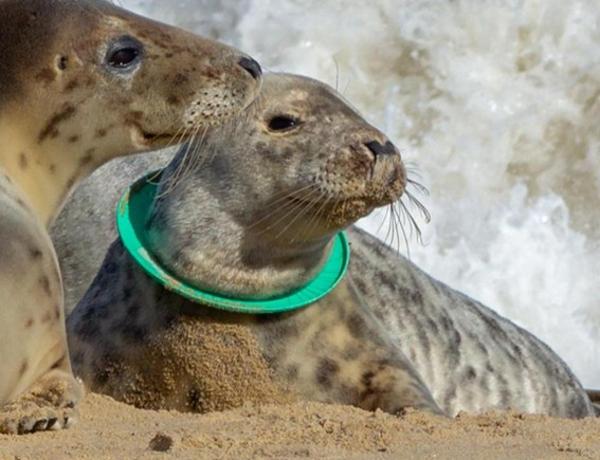
Some divers want more from their time underwater than another wreck. The BSAC Marine Champions initiative gets members and clubs into practical conservation work — habitat and species surveys, invasive species projects, and underwater litter removal — often alongside researchers and conservation organisations.
Members have also set up their own projects.
5. And what BSAC membership adds
Beyond your club, membership of the UK's National Governing Body for scuba diving and snorkelling brings:
- Third-party liability insurance
- Ten issues of SCUBA magazine a year
- Specialist diving and medical advice
- Access to national and regional training
- Member discounts on kit, services and travel
It also means someone is working on the things that keep diving going — safer diving standards, support for clubs and the volunteers who run them, and access to sites and schemes individual divers can't reach alone.