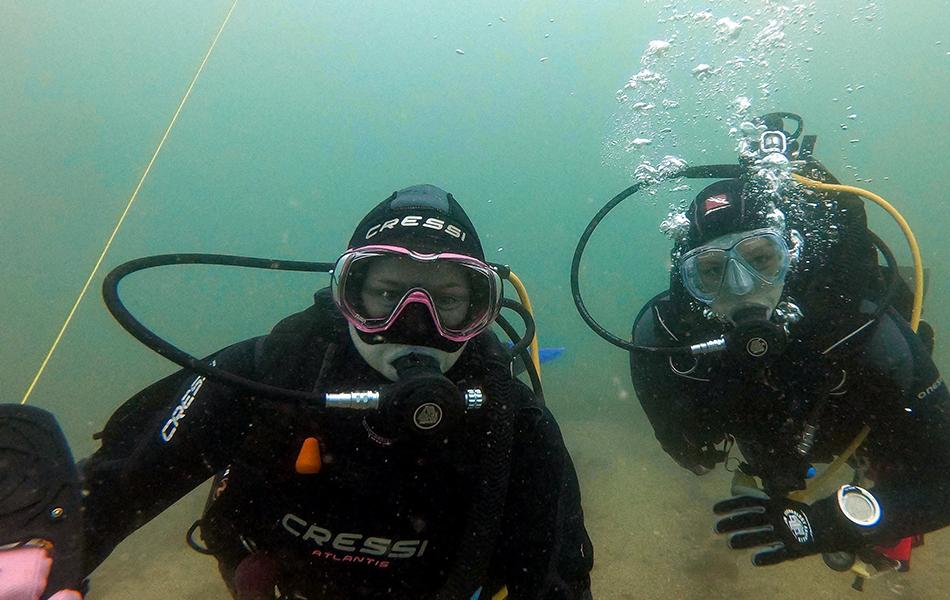

Mark Owens reports on Bingham SAC’s awe-inspiring expedition to the remote island group of St Kilda.
In a recent expedition that combined the thrill of scuba diving with the rich tapestry of history, a group of divers from Bingham Sub Aqua Club embarked on a memorable journey to St Kilda, a remote archipelago located west of the Scottish mainland. Organised by Expedition Officer Keith Wignall, the trip not only allowed divers to explore the vibrant marine environment, but also deepened their appreciation for the poignant history surrounding this UNESCO World Heritage site.
The Journey
We were travelling on board the Clasina, a large steel-hulled trawler converted for diving expeditions in 2020, owned and operated by Halton Charters. We journeyed to St Kilda, some 110 miles from the Scottish mainland and 40 miles west of North Uist. The islands are just as breath-taking above the water line as the underwater vistas awaiting our dive team. Renowned for dramatic cliffs, lush wildlife, and a remote community that finally abandoned the islands in 1930, St Kilda offers a diving experience that is both unique and awe inspiring. With its nutrient-rich waters known for exceptional visibility, our divers encountered a dazzling array of marine life, including playful seals, inquisitive dolphins, and vibrant kelp forests teeming with fish.
On our journey to St Kilda, we anchored at the Isle of Harris, which offered a brief yet delightful pause before our crossing to the archipelago. We seized the moment to unwind with a few drinks at the local hotel, eagerly anticipating the next leg of our voyage.
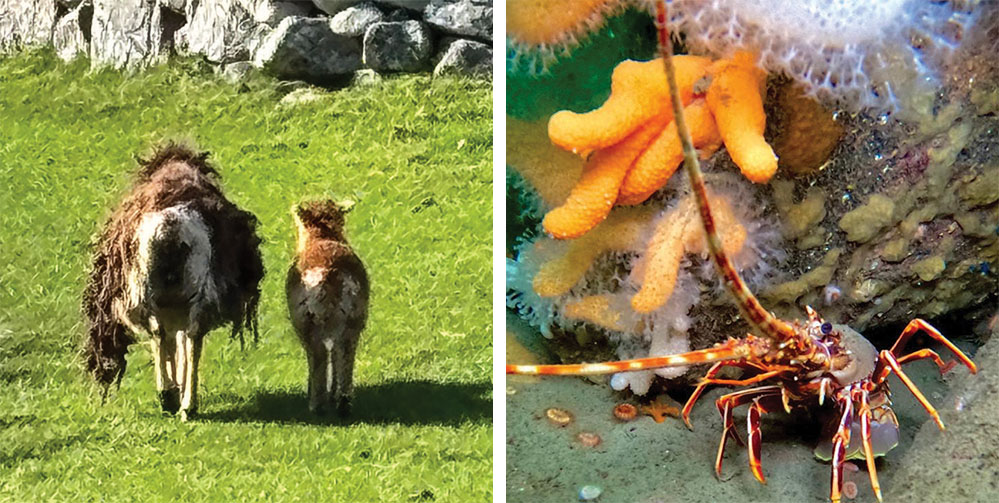
Feral Soay sheep | Crawfish and soft corals
Dive sites
The expedition covered a variety of dive sites, including the iconic Dun and Village Bay, where divers had the opportunity to explore underwater caves and canyons that add an exciting dimension to diving. However, it wasn’t just the marine life that captivated our divers. The team took time to explore the remnants of the abandoned village on Hirta, the main island, where the poignant history of the island community came alive. Once home to a thriving population, the island’s evacuation in 1930 sparked a deeper understanding of human resilience and the connection to nature.
“Each dive site was like entering a new world,” said diver Dan Vaughan. “From Stac Lee to Whale Rock, the underwater landscapes were incredibly diverse. Colourful soft corals and swaying kelp surrounded us, each dive revealing more of the beauty that lies beneath the surface.”
“Being able to connect with the history of St Kilda while experiencing the incredible marine environment was incredibly powerful,” said team member Jill Mellink. The visit brought home the importance of preserving both our natural and cultural heritage.”
Every dive in remote locations requires contingency plans and a strong focus on safety
The expedition underscored the ethos of responsible tourism, as Skipper Bob Anderson and expedition leader Keith Wignall emphasised the importance of environmental stewardship in such a fragile ecosystem. Divers were briefed on responsible diving practices, ensuring that their exploration had minimal impact on the underwater environment. “We want future generations to experience this beauty as we did, Bob said, reinforcing our own commitment to protecting these precious waters.
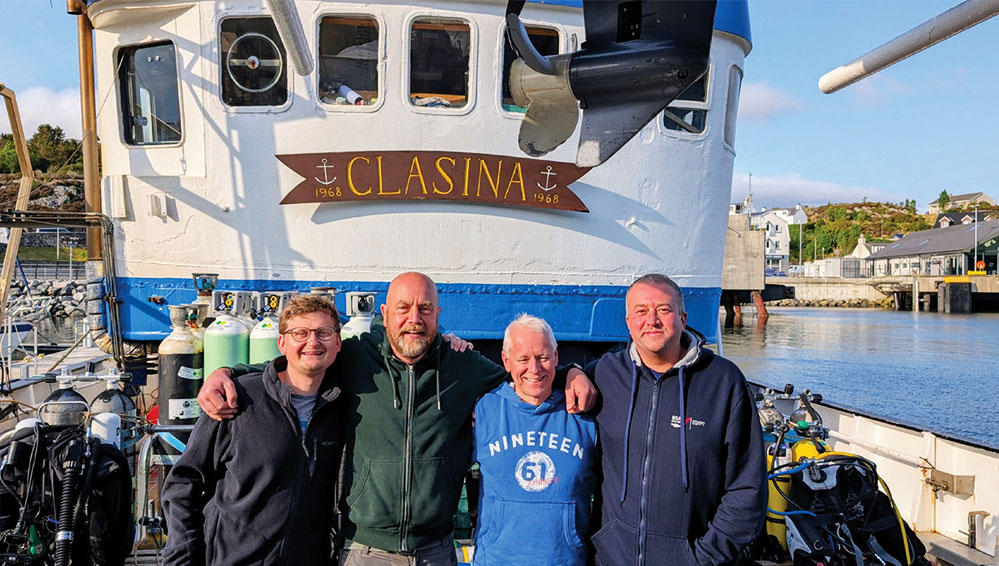
On board the Clasina liveaboard
During the voyage, the divers supported the crew by conducting anchor watch, a vital practice that involves monitoring the surroundings of a vessel while it is anchored, particularly during night-time. This responsibility typically falls to one or more team members who take turns on deck, ensuring that the vessel remains securely moored and safeguarding against potential dangers such as collisions or anchor dragging. On this trip, the experience was further enhanced by the mesmerising sight of the moonlight filtering through the night, creating a stunning backdrop for the watch.
Our final dive before heading back to civilisation occurred at Whale Rock, a striking double pinnacle situated approximately between St Kilda and Harris. Beneath us lay an expansive underwater terrain characterised by steep walls that plunged from 20 metres to over 50 metres in remarkably clear waters. Although we opted for two dives, I found myself wishing for a single, extended dive to prioritise quality over quantity; nonetheless, the divers relished the chance to explore both dives in such a breathtaking underwater setting.
However, diving in such remote locations is not without its challenges. The unpredictability of weather conditions can pose significant risks, turning a calm day into an unpredictable adventure. While the divers enjoyed favourable weather during their trip, the reality of diving in isolated settings means preparation is paramount. “We were lucky with the conditions,” team diver Bob Nowicki noted. “But every dive in remote locations requires contingency plans and a strong focus on safety.”
Despite the challenges, the allure of untamed underwater landscapes and the thrill of discovery often outweigh the risks for many divers. “Exploring these untouched reefs and rare marine life is what fuels my passion for diving,” said diver Petra O’Sullivan. “It’s a delicate balance between adventure and safety, and proper preparation can transform potential hurdles into unforgettable experiences.
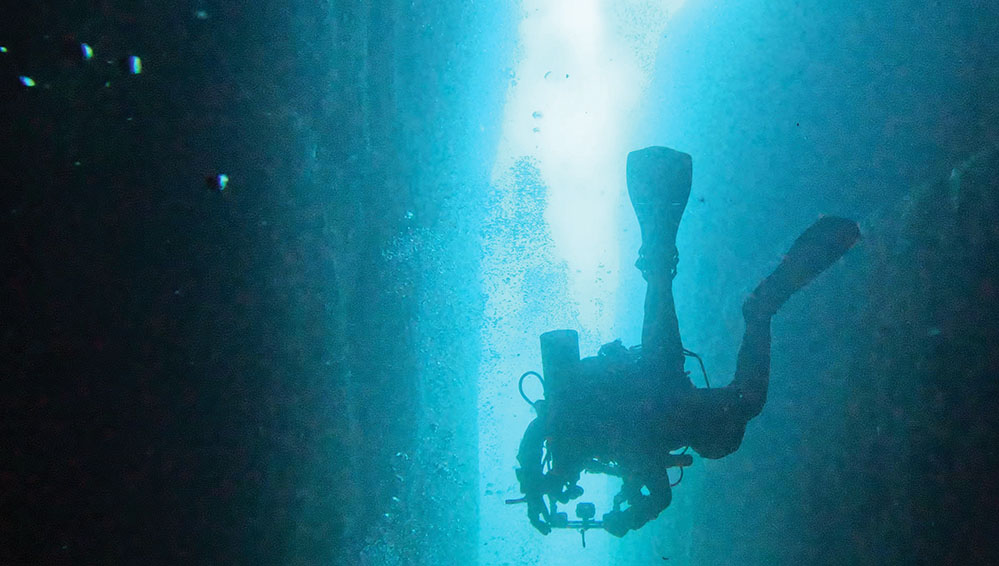
Diving the famous sawcut
Safety first
To ensure a safe and enjoyable diving adventure, experts recommend thorough research before embarking on expeditions to remote locations. Divers should carry reliable communication devices and always dive with a buddy. Understanding your environment and being aware of potential risks can make all the difference, as it’s not just about the dive; it’s about being prepared for everything that comes with it.
Reflecting on the expedition, it’s evident that while the beauty of remote diving destinations is undeniable, the inherent challenges cannot be overlooked. With the right preparation, knowledge, and respect for the natural world, divers can navigate these obstacles and create lasting memories amid some of the world’s most enchanting underwater scenery.
Bingham’s expedition to St Kilda was not merely a diving trip; it was a profound journey through history, culture, and the pristine beauty of our oceans. As divers returned home with stories etched in their memories, they carried with them a renewed commitment to preserving the fragile ecosystems that thrive beneath the waves, ensuring that future generations may also experience the magic of St Kilda’s underwater world.
Become a BSAC member
Want to scuba dive, make friends and have adventures? You can join a club near you!
To get started, find a club and send an enquiry.
This UK Diving article was originally published in SCUBA magazine, Issue 160, November 2025. For more membership benefits, visit bsac.com/benefits.
Images in this online version may have been substituted from the original images in SCUBA magazine due to usage rights.