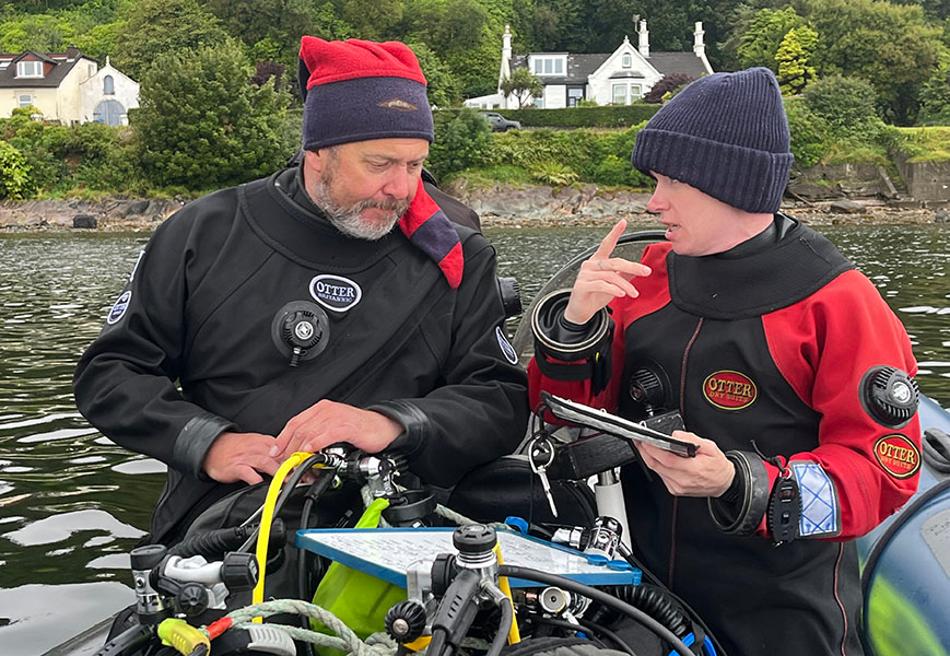
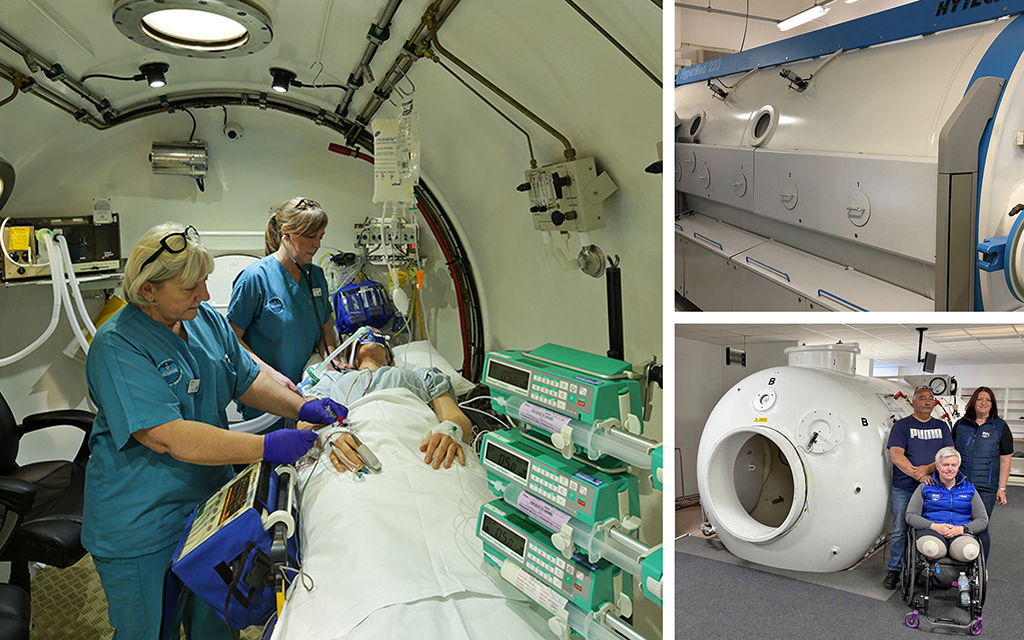
Over the past year, the UK diving community has faced significant uncertainty regarding the future of hyperbaric oxygen therapy (HBOT) provision in England. Following NHS England's commissioning process, divers were faced with the prospect of losing vital recompression coverage across large parts of the country, including the North West, North East and Midlands.
Today, we are pleased to share a positive update.
BSAC Lobbying: Thank you to everyone who took action
Over the past year, BSAC has worked extensively on behalf of the diving community to highlight the importance of maintaining equitable access to hyperbaric treatment across England. This has included direct engagement with NHS England, discussions with chamber providers, correspondence with MPs representing affected areas, and raising the issue with the Secretary of State for Health and Social Care, Wes Streeting.
Throughout this process, BSAC has sought to ensure that the voice of recreational divers was heard alongside the clinical, operational and safety considerations surrounding hyperbaric provision.
We are extremely grateful to the many BSAC members, clubs, dive centres, charter operators and organisations from across the wider diving industry who supported these efforts. Many divers took the time to write to their MPs, share their personal experiences and explain why access to recompression treatment is a critical component of the UK's diving safety infrastructure.
The collective response from the diving community helped demonstrate the strength of feeling surrounding the proposed changes and reinforced the importance of maintaining appropriate geographical coverage for emergency treatment services. The outcome achieved would not have been possible without the combined efforts of chamber teams, healthcare professionals, elected representatives and the wider diving community working together towards a common goal.
Recognition for the chamber teams
We would also like to recognise the professionalism, commitment and perseverance shown by the hyperbaric chamber teams throughout this process.
While uncertainty remained, staff and clinical teams continued to provide treatment, support patients and engage constructively with NHS commissioning teams to find solutions that would maintain vital services. Their dedication to diver safety and patient care has been unwavering.
Positive progress in the North of England
We are delighted to confirm that both Hull and Wirral hyperbaric facilities now have contracts in place, restoring commissioned provision across the North of England.
This is a hugely positive outcome and will come as a significant relief to divers, dive operators, emergency services and the wider diving community. Access to timely recompression treatment remains a fundamental element of diver safety, and maintaining provision in the North helps ensure that divers are not faced with unnecessarily long journeys when urgent treatment is required.
Whilst challenges remain elsewhere, securing these contracts represents an important step forward and demonstrates the value of continued engagement between providers, commissioners and stakeholders.
Whipps Cross continues to operate
LHM Healthcare at Whipps Cross continues to operate under an emergency care contract specifically to treat critically ill divers suffering from decompression illness and patients with gas embolism.
BSAC remains supportive of efforts to ensure that appropriate hyperbaric provision is maintained for divers and patients who may require emergency treatment.
Looking ahead
The past year has demonstrated the strength of the UK diving community when it comes together around an issue that affects diver safety.
BSAC will continue to engage with the British Diving Safety Group, chamber providers, clinicians and NHS stakeholders to support a sustainable and equitable hyperbaric network for divers across England.
For now, however, this update represents welcome news. We would like to thank everyone who contributed to the campaign, contacted their elected representatives, shared information, and supported the chamber teams throughout this period.
Together, the diving community has helped ensure that access to vital recompression services remains available where it is needed most.