
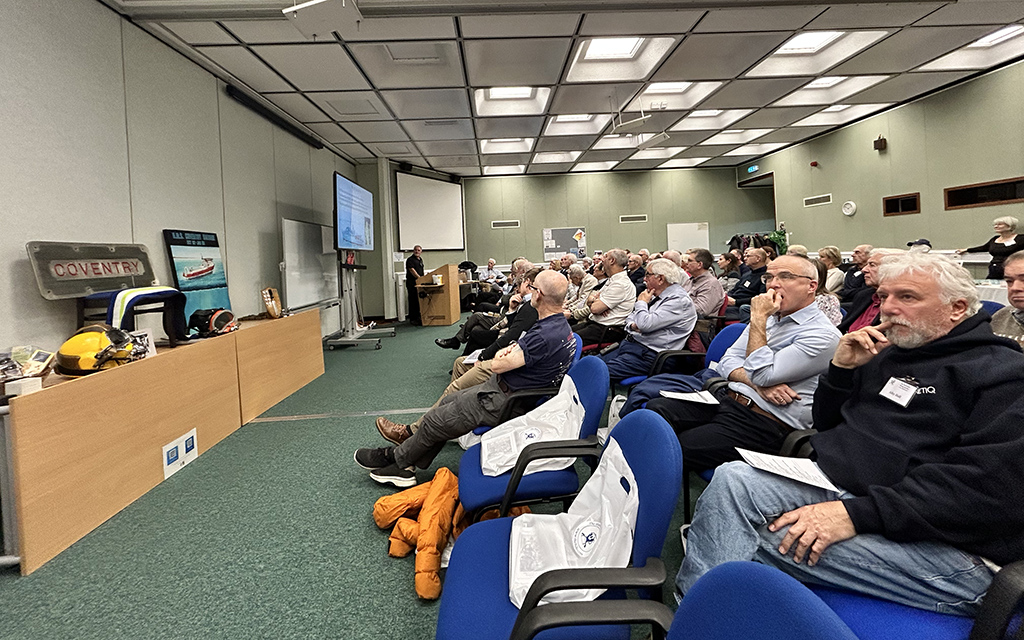
On Saturday 14 November 2026, the Historical Diving Society (HDS) gathered at the Institute of Naval Medicine (INM) in Alverstoke, Gosport – the Royal Navy's home of diving medicine – for its annual conference.
A full day of talks spanned naval research, wartime salvage, prehistoric archaeology and sunken gold, framed by a library visit, a formal dinner and a tour of The Diving Museum.
Highlights
The setting set the tone. Surgeon Commodore Jim Sykes, former Medical Officer in Charge at INM, opened with a personal perspective on naval diving research at Alverstoke since 1975 – a reminder that much of what divers now take for granted about diver safety was worked out within these walls.
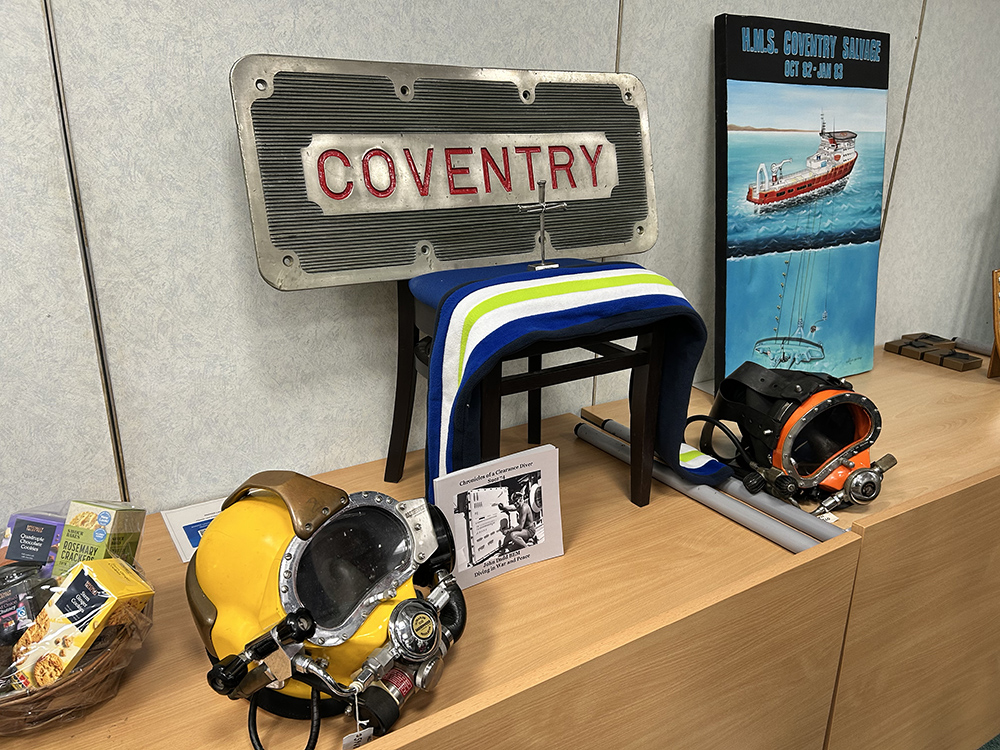
Artefacts and items relating to HMS Coventry, which was dived during Operation Blackleg
Paul "Yorky" Tudor, a Royal Navy Clearance Diver for 34 years, then took the room to the South Atlantic with Operation Blackleg: the 1982 recovery of sensitive equipment from the wreck of HMS Coventry after the Falklands conflict.
Dr Nic Flemming brought a detective story. His "mystery of the disappearing code" centred on a Neanderthal site around 100,000 years old, lying 20m down off Fermanville near Cherbourg, and the 1988 book describing it that all but vanished from view – until Nic digitised it and made it free to read online.
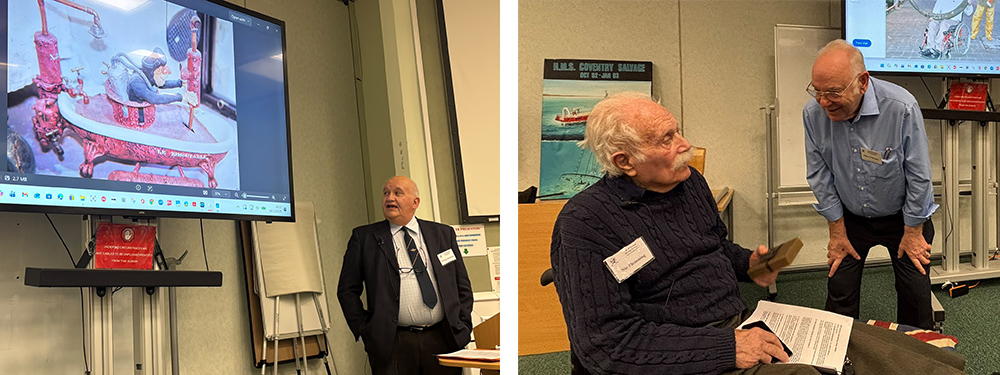
[L] Philippe Rousseau on a Siebe Gorman mystery; [R] Dr Nic Flemming with Mike O'Meara
After lunch, standing in for Dr Daisy Turnbull was HDS Chair Mike O'Meara, who focused on the safety culture running through his amazing career which spanned HMS Edinburgh, Piper Alpha and the Kursk. He handed over to HDS founding Secretary Dr Nick Baker for a revisit to the Laurentic's gold, drawing on Captain Damant's 1920s lectures to update the talk he gave at the Society's very first meeting in 1990. Closing the programme, Philippe Rousseau, retired Commandant of the French National Police, traced a trail of very early Seibe Gorman diving equipment from 19th-century England to late 20th-century France.
Liz James, HDS board member said:
Every year the conference reminds us that diving history isn't something kept behind glass – it lives in the people in the room. Hearing these stories from the divers, doctors and researchers who lived them, in the place where so much naval diving research happened, is what makes the day so special.
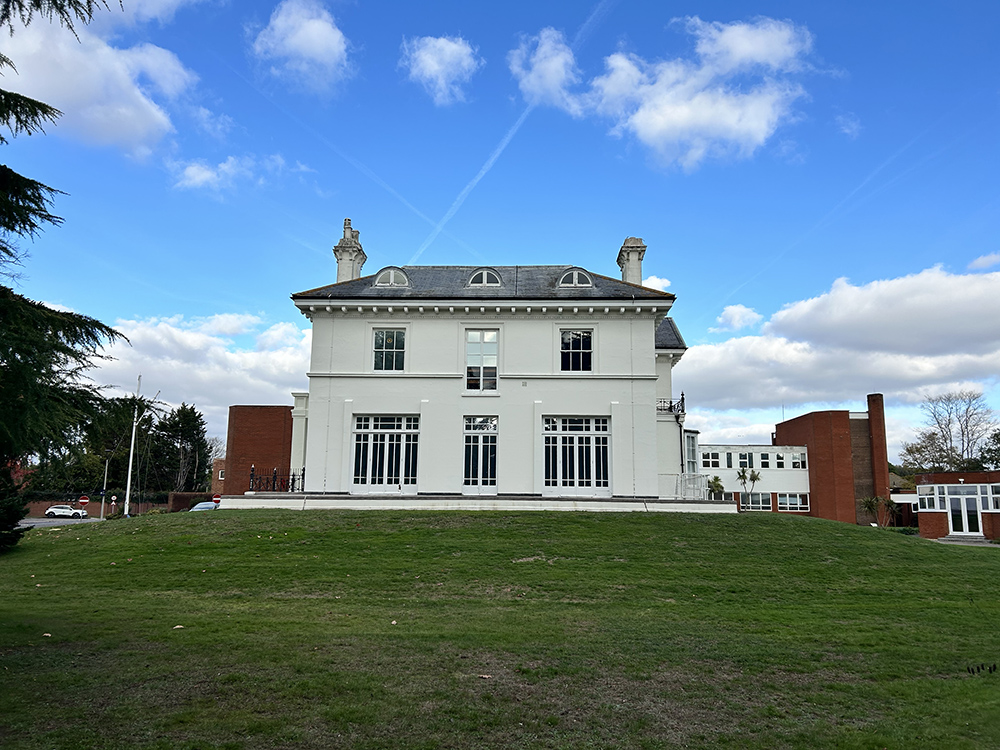
Institute of Naval Medicine in Alverstoke, Hampshire
The conference was followed by a black tie dinner on the Saturday, and tour of the newly refurbished Diving Museum in Stokes Bay on the Sunday morning.
Thirty-six years on from its founding, the Historical Diving Society is far more than a society of collectors. Through its conference, its published proceedings and the museum in Stokes Bay, it keeps diving's stories alive – and should remind those of us who dive today how much we owe to those who went underwater before us.
 Author: Patrick Holliday | Posted 18 Nov 2026


